Benjamin Franklin Levins: The Tampa Axe Murderer
Overview
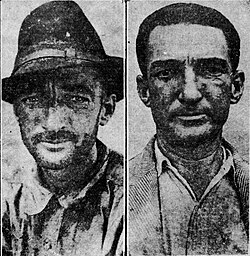
Between the spring of 1926 and the spring of 1927, a wave of brutal slayings terrorized Tampa, Florida, leaving ten people dead and a community gripped by fear. The crimes were marked by their savagery, with entire families being wiped out in their homes. At the center of this bloody chapter in Tampa's history was Benjamin Franklin Levins, a 38-year-old itinerant worker. Though he was only convicted of five of the murders, investigators believed him to be responsible for all ten. His confessions, which he repeatedly changed and recanted, painted a confusing picture of his motives. The public outrage following his arrest was so intense that it led to a deadly riot. Levins was executed in 1927, closing a case that left a lasting scar on the city.
Early Life and Background
Benjamin Franklin Levins was born in 1889 in Bullfrog, a small settlement on the edge of the Florida Everglades. Little is known about his early life, but as an adult, he was described as a fisherman, laborer, and itinerant worker. By the early 1920s, he had been living in Tampa for five or six years. He had been married to Emma Hilliard, but their marriage ended, and she is considered by many to be the first victim in the chain of murders linked to Levins.
The Murders
The series of killings began on April 28, 1926, with the murder of Emma Hilliard. She was found decapitated at 508 Nebraska Avenue. A newspaper vendor known as Charles "Blind Charlie" Manuel was discovered at the scene, drunk and holding a jackknife. Manuel claimed Hilliard was his girlfriend and, despite having no memory of the event, pleaded guilty to manslaughter in July, believing the witnesses who implicated him. However, doubts about his guilt would soon emerge.
Two months later, on June 28, 1926, a horrific scene was discovered at 116 South Nebraska Avenue. Four people were found hacked to death with an axe in the Rowell family home. The victims were 94-year-old Caroline Rowell; her son, Bee Dee Rowell, a 45-year-old grocery clerk; his 16-year-old daughter, Eva; and a 40-year-old mechanic and tenant, Charles Alexander. A neighbor discovered the bodies after noticing the unusual lack of activity at the house. Rumors began to circulate that Bee Dee Rowell had told people he knew "Blind Charlie" was innocent and that he could identify the real killer of Emma Hilliard, leading to speculation that the Rowell family was targeted to silence him.
The final and most shocking massacre occurred on May 27, 1927. Five members of the Merrell family were found murdered in their home at the corner of 1st Avenue and 31st Street. The victims were Herman "Looney" Merrell, a carpenter; his wife Nettie, who operated a drink stand; and three of their children: Ralph, 11; Mildred, 5; and Lester, just five weeks old. The bodies were discovered by 15-year-old Kenneth Merrell when he returned home from a night out. Miraculously, another son, 8-year-old Hugh, survived by hiding under a bed. The murder weapon, a railroad spike driver, was left at the scene.
The Victims
- Emma Hilliard — April 28, 1926. The ex-wife of Benjamin Levins, her brutal murder was the first in the series of killings. Another man was initially convicted of her death.
- Caroline Rowell, 94 — June 28, 1926. The elderly matriarch of the Rowell family, she was killed in her home alongside her son, granddaughter, and a tenant.
- Bee Dee Rowell, 45 — June 28, 1926. A grocery clerk, it was rumored that he was killed because he knew the identity of Emma Hilliard's true murderer.
- Eva Rowell, 16 — June 28, 1926. The teenage daughter of Bee Dee Rowell, she was a victim of the brutal axe attack on her family.
- Charles Alexander, 40 — June 28, 1926. A mechanic who was rooming with the Rowell family, he was also killed in the massacre.
- Herman "Looney" Merrell — May 27, 1927. A carpenter, he was killed with his wife and three of their young children in their home.
- Nettie Merrell — May 27, 1927. A drink stand operator, she was murdered alongside her husband and children.
- Ralph Merrell, 11 — May 27, 1927. One of the three Merrell children who lost their lives in the attack.
- Mildred Merrell, 5 — May 27, 1927. The youngest daughter of the Merrell family, she was a victim of the horrific home invasion.
- Lester Merrell, 5 weeks — May 27, 1927. The infant son of the Merrells, he was the youngest victim of the killing spree.
Investigation and Capture
The investigation into the Rowell murders had stalled, but the Merrell family massacre provided a crucial lead. The day after the killings, Benjamin Levins and a friend, Leonard Thompson, visited a fortune teller and asked if they would get into trouble for the murders. The psychic tipped off the police. That same day, Levins was overheard in a restaurant reading a newspaper account of the murders and declaring that Thompson was the killer.
Police staked out a lumber yard where Levins was known to sleep and arrested him shortly after midnight on May 28, 1927. Thompson was also taken into custody. In his initial questioning, Levins claimed he was guilty and that Thompson was innocent. A boot print at the Merrell home was matched to Levins, and he had a habit of breaking matches in a distinctive way, similar to matches found at the crime scene.
Levins' story, however, would change multiple times. He later confessed to the Rowell murders, claiming he had gotten into a fight with their tenant, Charles Alexander, over a girl and then killed the rest of the family to eliminate witnesses. In another version, he said he was angry with the Rowells for a "dirty trick." Regarding the Merrell murders, Levins confessed that it was a case of mistaken identity. He claimed he had intended to kill the Ryles family, who had previously lived in the house and had given police worthless information about the Rowell murders. Levins said he only realized he had killed the wrong family when he read about it in the newspaper the next day.
Public Reaction and Failed Lynching
News of Levins' arrest and confessions ignited a firestorm of public fury in Tampa. On May 29, 1927, a mob of over 1,500 people descended on the county jail, demanding that Levins be handed over to them for a lynching. The sheriff called in the Florida National Guard, who surrounded the jail with machine guns and sandbags. The enraged crowd rushed the jail, and the troops opened fire. The ensuing riot lasted for three days, leaving five people dead and more than 30 wounded. In the aftermath, Levins was secretly moved to a jail in Orlando for his safety.
Trial and Sentence
Benjamin Levins' trial for the murders of the Merrell family was held in Orlando in July 1927. His defense team argued that his confessions had been coerced, with police threatening to turn him over to the lynch mob if he didn't confess. On the stand, Levins changed his story again. He admitted to killing Herman Merrell but claimed it was in self-defense after Merrell caught him breaking into the house. He insisted that he fled after killing the patriarch and that Leonard Thompson had killed the rest of the family.
The jury was not swayed. Levins was convicted of five counts of first-degree murder and sentenced to death. In a separate trial three weeks later, Leonard Thompson was acquitted of all charges.
On the night before his execution, Levins protested his innocence but expressed that he would "make it all right up there." His final request for a stay of execution was denied. Benjamin Franklin Levins was executed in the electric chair at the Florida State Prison in Raiford on November 22, 1927, at 1:45 p.m.
Aftermath and Legacy
Following Levins' conviction, the case of "Blind Charlie" Manuel was revisited. The witnesses against him were deemed less credible, but there was not enough evidence to fully exonerate him. Manuel was released from prison on November 15, 1930. The series of brutal murders in 1926 and 1927 remain one of the most violent episodes in Tampa's history. The case highlighted the power of public outrage and the swift, and at times brutal, nature of justice in the early 20th century. The conflicting confessions of Benjamin Levins left some questions unanswered, but his execution brought an end to the city's year-long nightmare.