William Matix: The Miami Shootout Killer
Overview
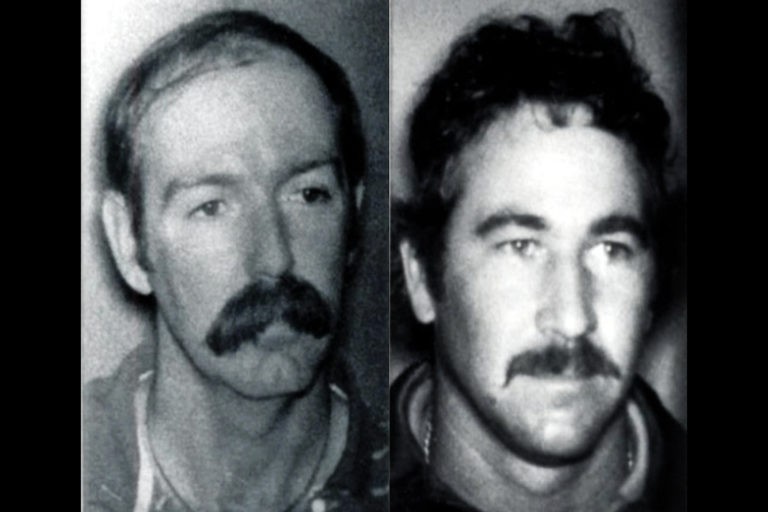
William Russell Matix, along with his accomplice Michael Lee Platt, conducted a brief but brutal crime spree of armed robberies and murder in the Miami area between 1985 and 1986. The former U.S. military men were responsible for a series of violent armored car and bank robberies that left at least one civilian dead and others wounded. Their rampage culminated on April 11, 1986, in what is now known as one of the bloodiest events in FBI history. During a ferocious gun battle in a suburban South Florida neighborhood, Matix and Platt killed two FBI special agents and wounded five others before they were both killed by law enforcement. The incident, which exposed the Bureau's inadequate firepower, led to sweeping changes in the weapons, ammunition, and tactics used by the FBI and police departments nationwide.
Early Life and Background
William Russell Matix was born on June 25, 1951, in Lewisburg, Ohio. He served in the U.S. Marine Corps from 1970 to 1972, working as a cook and achieving the rank of Sergeant before his honorable discharge. He later enlisted in the U.S. Army and was assigned to the Military Police unit at Fort Campbell, Kentucky. It was there, in the mid-1970s, that he met Michael Lee Platt.
Platt, born February 3, 1954, was an infantryman who had completed Army Airborne Ranger training. The two men served together as military police and formed a close friendship. After leaving the military, they went their separate ways but remained in contact. Matix married Patricia Buchanich and settled in Ohio, where they had a daughter in October 1983.
A shadow fell over Matix's life on December 30, 1983, when his wife, Patricia, and her coworker, Joyce McFadden, were found brutally stabbed to death at the Riverside Methodist Hospital laboratory in Columbus, Ohio, where they worked. Matix was a suspect in the unsolved double homicide, but was never charged. He later collected on a significant life insurance policy.
Following his wife's death, Matix moved to Miami at the urging of Platt, who had also relocated to Florida and started a landscaping business called "The Yankee Clipper." Matix joined Platt in the business. The two men, both outwardly appearing to be ordinary family men, lived near each other. Platt's wife, Regina, died from a shotgun blast to the mouth on December 21, 1984; her death was ruled a suicide. Investigators later considered the theory that Matix and Platt may have murdered each other's wives, but this was never proven.
The Crime Spree
In the fall of 1985, Matix and Platt, with no prior criminal records, began a series of violent crimes in and around Miami-Dade County. They armed themselves and adopted a ruthless approach, often targeting armored cars and men they encountered at remote target-shooting locations.
Their first known murder occurred on October 5, 1985. They killed 25-year-old Emelio Briel at a rock quarry where he was target shooting. They stole his gold 1977 Chevrolet Monte Carlo, a vehicle they would use as a getaway car in subsequent robberies. Briel's remains were not found until months later.
Over the next several months, the pair committed a string of brazen robberies. On October 16, they attempted to rob a Wells Fargo armored car, shooting a guard in the leg. That guard later died from his wound. In other robberies, they ambushed guards and fired their weapons with little hesitation, using a shotgun and a high-powered Ruger Mini-14 rifle.
On March 12, 1986, in an act mirroring Briel's murder, they found Jose Collazo target shooting at another rock pit. They shot him multiple times and left him for dead, stealing his black 1979 Chevrolet Monte Carlo and his Ruger Mini-14 rifle. Miraculously, Collazo survived and was able to walk three miles to get help, providing police with descriptions of his attackers. Matix and Platt then used Collazo's car in another bank robbery on March 19.
The Victims
The crime spree of William Matix and Michael Platt left a trail of death and trauma. The following are the individuals they are proven to have killed:
- Emelio Briel, 25 — October 5, 1985, in a remote Miami-Dade rock quarry. Briel was enjoying a day of target shooting when he was murdered by Matix and Platt, who then stole his car to use in their violent robberies.
- Benjamin P. Grogan, 53 — April 11, 1986, in Miami-Dade County, Florida. A 25-year veteran of the FBI, Special Agent Grogan was a respected supervisor known as "The Doctor." He was one year from retirement when he was killed in the line of duty.
- Jerry L. Dove, 30 — April 11, 1986, in Miami-Dade County, Florida. A dedicated special agent who had been with the FBI for four years, Dove was killed alongside his partner, Benjamin Grogan, during the intense firefight with the heavily armed suspects.
In addition to those killed, Matix and Platt wounded several others, including armored car guards and five FBI special agents. Jose Collazo survived being shot multiple times and left for dead.
Investigation and The Miami Shootout
The FBI's Miami field office assembled a task force to hunt the violent and elusive bank robbers. A key breakthrough came from the surviving victim, Jose Collazo, whose description of his attackers and his stolen black Monte Carlo gave agents a specific target. Believing the robbers would strike again, a team of 14 FBI agents in 11 cars began a "rolling stakeout" on the morning of April 11, 1986, searching for the vehicle.
Around 9:30 a.m., Special Agents Benjamin Grogan and Jerry Dove spotted the Monte Carlo. They began to follow it, and other FBI cars converged on the location. The agents attempted to perform a felony traffic stop, forcing the suspects' car off the road at 12201 Southwest 82nd Avenue in a suburban area of South Dade, now part of Pinecrest. The Monte Carlo crashed into a tree, pinned between a parked car and an agent's vehicle.
What followed was a gun battle of extraordinary intensity that lasted less than five minutes but involved the exchange of nearly 150 rounds. Matix and Platt immediately opened fire. Matix fired a shotgun from the driver's seat, wounding Special Agent Richard Manauzzi. Platt, in the passenger seat, fired his Ruger Mini-14 rifle, a weapon that proved devastatingly effective against the agents' service revolvers and 9mm semi-automatic pistols.
Early in the fight, Matix was hit multiple times in the head and neck by shots from Special Agent Gordon McNeill and was rendered unconscious for a period. Platt, however, exited the car and continued to fight with ferocious determination, despite being shot multiple times himself. He was hit in the chest, arm, thigh, and feet but continued to advance on the agents' positions.
Platt systematically targeted the agents. He shot and wounded Special Agent McNeill in the hand and neck. He shot Special Agent John Hanlon in the hand and groin. He then advanced on the car where Agents Grogan and Dove were positioned, killing Grogan with a shot to the chest and then killing Dove with two shots to the head at close range. Five of the eight agents involved in the shootout were wounded.
The Deaths of Matix and Platt
After killing Agents Grogan and Dove, the severely wounded Michael Platt got into their FBI vehicle, attempting to escape. William Matix, who had regained consciousness, joined him in the car.
Special Agent Edmundo Mireles Jr., who had been grievously wounded with a shattered left arm, managed to rise and engage the suspects. Unable to use his left arm, Mireles propped his pump-action shotgun against a vehicle and fired one-handed, hitting Platt in the feet. As Platt and Matix tried to start the car, Mireles drew his .357 Magnum revolver and advanced. He fired six rounds at the car, hitting Matix three times in the face and Platt twice more, finally ending the gunfight.
William Matix was shot a total of six times. Michael Platt had been shot twelve times. Toxicology reports showed no drugs in their systems; they had fought through their catastrophic injuries on adrenaline alone.
Aftermath and Legacy
The 1986 Miami shootout was a traumatic and transformative event for the FBI. The fact that two criminals could hold off eight agents, killing two and wounding five, was a brutal shock. An internal review concluded that the agents were dangerously outgunned. Their standard-issue revolvers and 9mm pistols lacked the stopping power to immediately neutralize Platt and Matix, who continued to fight despite receiving what should have been fatal wounds.
In the direct aftermath, the FBI began a comprehensive overhaul of its firearms. This led to the adoption of more powerful ammunition and the transition to higher-capacity, 10mm and later .40 S&W caliber semi-automatic pistols for all special agents. The Bureau also enhanced its body armor and implemented new training protocols for deadly force encounters. These changes were subsequently adopted by many state and local law enforcement agencies across the United States, fundamentally reshaping police firepower and tactics for decades to come.
In 2001, the Village of Pinecrest, Florida, honored the fallen agents by co-designating a portion of Southwest 82nd Avenue as Agent Benjamin Grogan Avenue and Agent Jerry Dove Avenue, ensuring their sacrifice would not be forgotten.