Bruce Millsap: The Southern California Robbery-Murder Spree
Overview
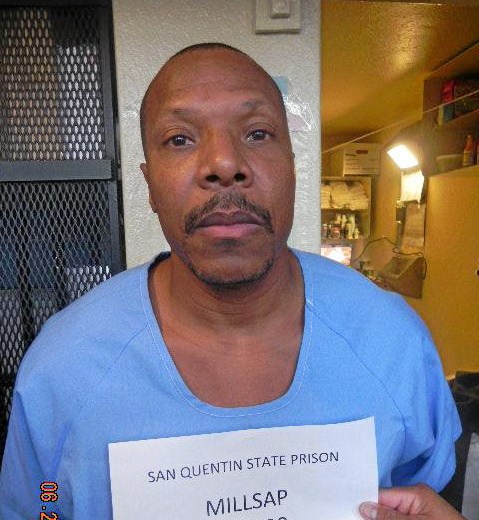
Between November 1995 and November 1996, a wave of exceptionally violent robberies swept across Southern California, leaving a trail of terror and death. At the center of this rampage was Bruce "Loco" Millsap, a leader of the 190 East Coast Crips. Millsap orchestrated and personally carried out a series of brutal armored car heists and other robberies that claimed the lives of eight men across Los Angeles, Orange, and San Bernardino counties. The crew's signature was its shocking callousness; victims, often armored car guards, were frequently shot and killed without provocation or a chance to comply. The motives were financial gain and, in one chilling instance, the elimination of a witness. The spree ended when an accomplice cooperated with authorities, leading to the arrests of Millsap and his key associate. In 2000, a jury convicted Millsap of eight counts of murder with special circumstances, and a judge sentenced him to death eight times over, sending him to California's death row.
Early Life and Gang Affiliation
Born in California on March 21, 1967, little is publicly known about Bruce Millsap's life before he became a dominant figure in the criminal underworld. By the mid-1990s, he had risen to a position of authority within the 190 East Coast Crips, a street gang based in Carson, California. Known on the street as "Loco," a moniker that reflected his volatile and violent nature, Millsap directed his gang's activities. He escalated their operations from typical street crimes to a highly organized and militaristic series of armed robberies targeting businesses and, most frequently, armored transport vehicles.
The crew he assembled for this bloody enterprise included Kendrick Loot, Richard Colston, and Emanuel Brown. Together, they planned and executed their attacks with ruthless efficiency. The substantial sums of money they stole, estimated to be in the hundreds of thousands of dollars, were used to fund a lavish lifestyle, including the purchase of luxury cars and a house in Riverside County that served as a hideout.
The Murder Spree
The year-long reign of terror began on November 15, 1995. Millsap and Kendrick Loot were driving when they spotted Ramone McKissick, 22, who was reportedly a member of a rival Bloods gang. In a brazen act of gang violence, Millsap opened fire, killing McKissick. This murder, while not part of a robbery, set the stage for the bloodshed to come.
Just two weeks later, on November 30, 1995, the crew executed their first fatal armored car heist. Fernando Herrera, a 35-year-old guard for Armored Transport Inc., was servicing a Bank of America ATM at the Queen City Bank in Long Beach. As Herrera stepped from his truck, Millsap ambushed him, shooting him in the chest with a 9mm handgun. The crew escaped with the money, leaving the married father of two to die. This attack established the brutal modus operandi that would define their spree.
The violence took a different turn on January 31, 1996. Millsap’s target was not a stranger but a man who posed a direct threat to his freedom. Manuel Garibay, 28, was a witness scheduled to testify against Millsap in an unrelated assault case. To silence him permanently, Millsap hunted Garibay down and murdered him, a cold-blooded act of witness elimination.
The attacks on armored cars resumed on February 9, 1996. James Moon, a 49-year-old armored car driver, was making a pickup at Curtiss Junior High School in Millsap's home city of Carson. As Moon walked with a bag of money, Millsap and his crew ambushed him. Moon was shot and killed, and the robbers fled with the cash. The murder of a man at a school in broad daylight sent a new wave of fear through the community.
The summer of 1996 saw a shocking escalation. On August 28, the crew committed a triple homicide during a pair of robberies. First, they targeted the La Placita Meat Market in Bellflower. During the robbery, they shot and killed the market's owner, Francisco Parocua, 28, and a butcher, Carlos Nuno, 31. Later that same day, they robbed a check-cashing business in Lakewood. Patrick Barnett, 30, a customer who happened to be in the store, was shot and killed. This bloody day demonstrated the crew's indiscriminate willingness to kill anyone who stood in their way, whether they were the target or simply a bystander.
The final murder occurred on November 3, 1996, in San Bernardino County. Lamont Smith, a 30-year-old guard for Armored Transport Inc., was collecting cash from a Walmart in the city of Highland. As Smith exited the store, Millsap shot him dead and fled with the money. This murder, over 60 miles from the crew's usual area of operation, showed the geographic scope of their crimes and would ultimately be the last life Millsap would take.
The Victims
- Ramone McKissick, 22 — November 15, 1995. He was shot and killed in what was described as a gang-related attack.
- Fernando Herrera, 35 — November 30, 1995. A devoted husband and father of two young children, he was an armored car guard murdered during a robbery in Long Beach.
- Manuel Garibay, 28 — January 31, 1996. He was targeted and killed to prevent him from testifying against Millsap in a separate criminal case.
- James William Moon, 49 — February 9, 1996. A U.S. Army veteran and armored car driver, he was killed during a holdup at a junior high school in Carson.
- Francisco Parocua, 28 — August 28, 1996. The owner of La Placita Meat Market in Bellflower, he was murdered during a robbery of his business.
- Carlos Nuno, 31 — August 28, 1996. A butcher working at La Placita Meat Market, he was killed alongside the store's owner.
- Patrick Barnett, 30 — August 28, 1996. A customer at a check-cashing store in Lakewood, he was tragically killed during a robbery.
- Lamont Smith, 30 — November 3, 1996. An armored car guard, he was shot and killed during a robbery outside a Walmart in Highland.
Investigation and Capture
The string of murders, linked by ballistic evidence and a consistent, ruthless method, triggered a massive multi-agency investigation. Law enforcement from Los Angeles, Orange, and San Bernardino counties, along with the FBI, formed a task force to hunt the men they dubbed "super predators." The breakthrough came from within the gang itself.
Richard Colston, a member of the crew, was arrested on unrelated charges. Facing the possibility of the death penalty for his role in four of the murders, he agreed to cooperate with investigators. Colston provided a detailed account of the crime spree, implicating Millsap as the leader and triggerman in all eight murders and identifying Kendrick Loot as a key participant.
Based on Colston's information, authorities moved in on the remaining members. In late 1996, Bruce Millsap and Kendrick Loot were arrested, bringing their reign of terror to an end. The fourth member of the crew, Emanuel Brown, was also taken into custody but died by suicide in his jail cell before he could face trial.
While awaiting trial in Los Angeles County Jail, Millsap's violent intentions continued. Authorities uncovered a plot in which Millsap allegedly solicited the murder of the two deputy district attorneys prosecuting his case, Kevin McCormick and Antony Myers, as well as two key witnesses. The plot led to a legal battle over a potential conflict of interest. A judge ultimately ruled that the prosecutors could proceed with the murder trial but would be recused from trying the separate solicitation charges. Prosecutors later decided not to pursue the solicitation case.
Trial and Sentencing
The trial of Bruce Millsap and Kendrick Loot began in late 1999 in Los Angeles Superior Court. The prosecution, led by Deputy District Attorneys Antony Myers and Kevin McCormick, presented a mountain of evidence, including ballistics, eyewitness testimony, and the crucial testimony of accomplice Richard Colston. Colston detailed the planning and execution of the robberies and murders, placing the gun in Millsap's hand for each killing.
Throughout the proceedings, Millsap was defiant and disruptive. He clashed with his own defense attorney, accusing him of incompetence and suffering from Alzheimer's disease. His outbursts did little to sway the jury.
On January 13, 2000, after less than two days of deliberation, the jury found Bruce Millsap guilty on all 23 felony counts filed against him. These included eight counts of first-degree murder, each with special circumstances of murder during a robbery, murder for financial gain, and multiple murders, which made him eligible for the death penalty. He was also convicted of multiple counts of robbery and attempted murder. His co-defendant, Kendrick Loot, was convicted of three counts of murder and 15 other felonies.
During the penalty phase, prosecutors argued that the sheer brutality and cold-blooded nature of Millsap's crimes warranted the ultimate punishment. Deputy D.A. Myers described Millsap and Loot as men "completely bereft of any understanding or compassion for human life."
On February 23, 2000, Superior Court Judge J.D. Smith formally handed down the sentences. He condemned the defendants' actions, noting the profound and lasting pain they had inflicted on the victims' families. Judge Smith sentenced Bruce Millsap to eight separate death sentences, one for each life he took, plus an additional 200 years in state prison. Kendrick Loot received one death sentence for the murder of Lamont Smith and two sentences of life in prison without the possibility of parole.
Appeals and Imprisonment
Following his sentencing, Bruce Millsap was transferred to California's death row at San Quentin State Prison to await execution. Under California law, his death sentences triggered an automatic, lengthy appeals process. Over the subsequent decades, his case has slowly moved through the state and federal court systems as his attorneys have raised numerous legal challenges to his conviction and sentence. In 2018, the California Supreme Court upheld his conviction and death sentence on direct appeal, rejecting claims of trial court error and juror misconduct.
His case has continued through further habeas corpus appeals. In 2023, his attorneys sought to have his sentence reconsidered under a new state law allowing for resentencing in certain felony murder cases. However, in early 2025, an appellate court ruled that the trial court did not have jurisdiction to modify his sentence while his appeals were still active in the higher courts, leaving his death sentences in place.
Aftermath
While incarcerated, Bruce Millsap has remained a figure of public interest. In August 2016, his name returned to the headlines when a 49-year-old Los Angeles Unified School District teaching assistant, Teri Nichols, was arrested during a visit to San Quentin. Prison guards discovered she was attempting to smuggle a significant amount of contraband to Millsap, including heroin, methadone pills, and 18 cellphones with chargers, all hidden in a beanie she wore. Investigators believed she had become infatuated with Millsap. In November 2017, Nichols pleaded guilty to a felony charge of attempting to bring a controlled substance into a prison and was sentenced to six months in jail and three years of probation. The incident highlighted the ongoing security challenges posed by high-profile inmates like Millsap. As of the mid-2020s, Bruce Millsap remains on death row, his case one of hundreds in California's complex and stalled capital punishment system.