Ivan Lee Page: The Flint Serial Killer
Overview
Between the spring of 1998 and the winter of 2001, a shadow fell over the city of Flint, Michigan. Three women were found dead in separate incidents, their bodies discarded in desolate, public places. The victims—Patricia Peeler, Lisa Marie Price, and Deena Brown—shared similar vulnerabilities, and their deaths shared a grim signature. For years, their cases grew cold, leaving families tormented by unanswered questions and a community fearful of a predator in their midst. The trail seemed to have vanished entirely until 2007, when the silent power of forensic science reached into a state prison. A routine DNA sample, taken from an inmate named Ivan Lee Page serving time for unrelated drug and weapons charges, provided a stunning match to evidence from all three murder scenes. The breakthrough reignited a dormant investigation, leading to Page's trial and conviction for one of the murders and ensuring he would be imprisoned for life, finally bringing a measure of justice to the families who had waited so long.
Early Life and Background
Ivan Lee Page was born on April 7, 1969. Despite the notoriety he would later achieve, details about his upbringing, family life, education, and employment history have not been made public. His life prior to his criminal activities remains largely undocumented, a blank slate that offers no clues or explanations for the violence he would later commit. By the time he was identified as a serial killer, his known history was primarily a criminal one. In March 2006, he was convicted of possession of cocaine and felony firearm charges, which led to the prison sentence that would ultimately be his undoing. It was this incarceration that placed his genetic blueprint into the national database, forging the link that would solve three murders.
The Murders
The series of killings began on May 13, 1998. The body of 34-year-old Patricia Ann Peeler, known to friends as "Tresa," was discovered near Avenue A in an area of Flint known for sex work. The initial assessment by police at the scene pointed toward a possible drug overdose, a tragically common conclusion for women living on the margins. However, the county medical examiner, Dr. Ljubisa Dragovic, suspected something more sinister. His autopsy revealed that while there were drugs in her system, the cause of death was likely asphyxiation, specifically smothering. Crucially, investigators collected biological evidence from her body, preserving a male DNA profile that would one day become the key to the case.
The killer waited more than a year before striking again. On October 8, 1999, the body of 31-year-old Lisa Marie Price was found in the yard of a home on Susan Street. Price, who was originally from Canton, Ohio, had also been asphyxiated. An autopsy determined her cause of death was strangulation. As with the Peeler case, forensic evidence was carefully collected from the scene and from Price's body. When the DNA profile was analyzed, it matched the sample recovered from the murder of Patricia Peeler. The police now knew they were not dealing with isolated incidents; a serial killer was actively targeting women in Flint.
The final murder attributed to Page occurred on January 20, 2001. Deena L. Brown, a 34-year-old mother of three, was found dead behind the Northridge Academy, a local school. She was partially undressed, and a man's sweatshirt was found next to her body. The autopsy confirmed that she, too, had been strangled. The sweatshirt, which investigators believed was the murder weapon, was sent for forensic analysis. It yielded the same male DNA profile that had been found on Patricia Peeler and Lisa Marie Price, cementing the link between the three brutal slayings. With this third victim, a clear pattern of violence had emerged, but the identity of the man responsible remained a mystery.
The Victims
- Patricia Ann Peeler, 34 — Known as "Tresa," she was found on May 13, 1998. She was a daughter and a sister, and her death was the first in a series that would haunt Flint for nearly a decade.
- Lisa Marie Price, 31 — Discovered on October 8, 1999, she was originally from Canton, Ohio. Her life was violently cut short, and she became the second victim linked to the same unknown killer.
- Deena L. Brown, 34 — A mother of three children, her body was found on January 20, 2001. Her family's long wait for justice would become a central focus of the eventual court proceedings.
Investigation and Capture
For more than six years, the files on the murders of Peeler, Price, and Brown remained open but inactive. The DNA profile linking the three crimes was a powerful piece of evidence, but without a suspect to match it to, investigators were at a standstill. The cases were cold, and the prospect of finding the killer seemed to dwindle with each passing year.
The break came unexpectedly in August 2007. Ivan Page, then 38 years old, was serving a prison sentence at a camp in mid-Michigan for his 2006 drug and weapons convictions. As was standard procedure for all convicted felons, Page had been required to provide a DNA sample for inclusion in the FBI's Combined DNA Index System (CODIS). When his profile was uploaded, the system flagged a direct match—not to one, but to all three unsolved Flint murders.
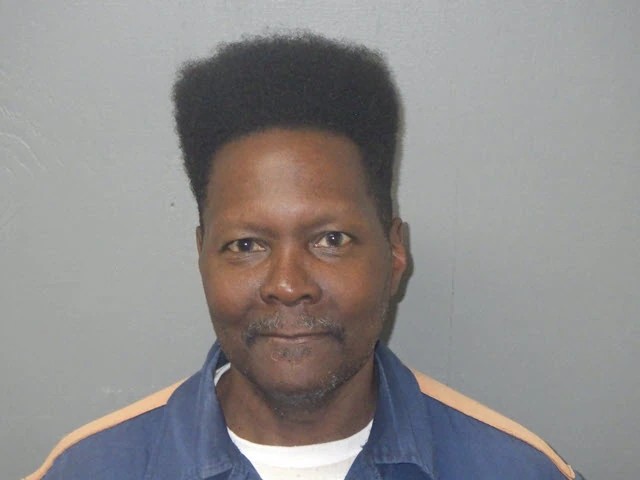
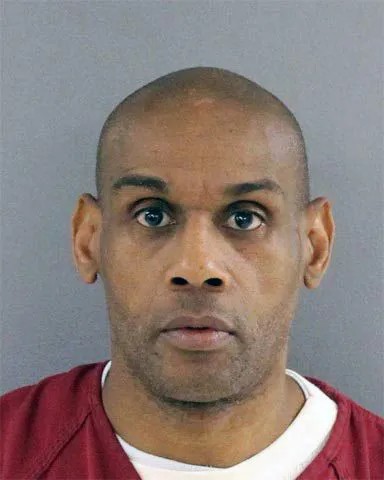
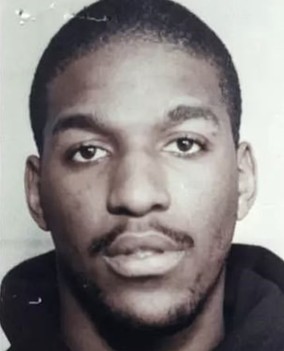
Investigators finally had a name and a face for the DNA profile they had held for nearly a decade. Genesee County Prosecutor David Leyton announced the breakthrough, and Ivan Page was charged with three counts of open murder. The news sent a shockwave through the community and brought a renewed sense of hope to the victims' families. The cold cases were now active and headed for court.
The DNA was the cornerstone of the case, but detectives worked to build a more complete picture of Page's guilt. They re-interviewed individuals connected to Page and the victims, uncovering crucial witness testimony. One of the most significant witnesses was Jerome Currie, a man who had been Page's cellmate. Currie told investigators that Page had frequently and casually bragged about his violence toward women, using chilling phrases like "choking hos" and "killing those hos." He claimed Page spoke of the murders as if they were insignificant, a disturbing insight into the killer's mindset.
Another key witness, Lee Plum, came forward with information about the night of Deena Brown's murder. Plum testified that he was with Page and Brown at a house on the evening of January 19, 2001. He recalled that Page and Brown went into a separate room together. According to Plum, Page became angry with Brown, and after a short time, Page emerged from the room alone. Brown was never seen alive again. Her body was discovered the next day. Plum's testimony placed Page with the last known victim just hours before her death, providing a critical timeline that corroborated the forensic evidence.
Trial and Sentence
In December 2008, Ivan Lee Page stood trial in Genesee Circuit Court for the first-degree premeditated murder of Deena Brown. The prosecution, led by Assistant Prosecutor Marla Neuman, chose to focus on the Brown case because the evidence was considered the most direct. The sweatshirt found at the scene not only contained Page's DNA but was also identified as the instrument of her death.
During the trial, the prosecution presented a powerful case built on the twin pillars of science and testimony. Jurors heard from forensic experts who explained the certainty of the DNA match linking Page to the sweatshirt used to strangle Brown. They also explained that the same DNA profile connected him to the murders of Peeler and Price, establishing a clear pattern of serial violence.
The courtroom then heard the compelling testimony of Lee Plum, who recounted the final hours of Deena Brown's life and placed her in the company of an angry Ivan Page. Jerome Currie followed, telling the jury about Page's chilling jailhouse confessions. Currie's testimony was particularly damning, as he quoted Page boasting about the very method of murder—strangulation—that had been used on the victims.
Page's defense attorney, Myron Greene, faced an uphill battle against the mountain of evidence. He argued that the presence of Page's DNA on the sweatshirt only proved that he had engaged in sexual activity with Brown, not that he had killed her. Greene suggested that another person could have committed the murder, attempting to create reasonable doubt in the minds of the jurors.
After a week-long trial, the jury was not persuaded by the defense's arguments. On December 11, 2008, they returned a verdict, finding Ivan Lee Page guilty of first-degree murder. The conviction carried a mandatory sentence in Michigan of life in prison without the possibility of parole.
On January 26, 2009, Page appeared for sentencing. Deena Brown's family members were present and delivered emotional victim impact statements. Her sister spoke of the profound and lasting pain of losing Deena, describing her as a wonderful person whose life was senselessly stolen. When it was his turn to speak, Page maintained his innocence, telling the court, "I'm not the person who did this." Judge Judith A. Fullerton was unmoved, imposing the mandatory life sentence and telling Page he would spend the rest of his natural life in prison.
Given the airtight life sentence, Prosecutor David Leyton announced that his office would not proceed with separate trials for the murders of Patricia Peeler and Lisa Marie Price. He explained that while the evidence strongly linked Page to their deaths, further prosecutions would be costly and emotionally taxing for the families, with no practical effect on Page's punishment. He was already guaranteed to die in prison.
Aftermath and Legacy
The conviction of Ivan Page brought an end to a decade of uncertainty and fear. For the families of his victims, the verdict provided a long-awaited sense of justice and closure, even if the legal proceedings only formally addressed one of the three murders. The case became a prominent example of the indispensable role of DNA databanks in solving cold cases. Without the routine collection of Page's DNA during his unrelated prison sentence, a serial killer may have remained free and unidentified, and the families of his victims would have been left without answers.
Page later appealed his conviction, arguing that his trial lawyer was ineffective and that the evidence was insufficient. In 2010, the Michigan Court of Appeals rejected his claims, affirming the original verdict and sentence. The court found that the combination of the DNA evidence, his jailhouse confessions, and the witness testimony placing him with the victim shortly before her death was more than enough to support the jury's finding of guilt.
Ivan Lee Page continues to serve his life sentence without parole in the Michigan Department of Corrections. His crimes serve as a dark reminder of the dangers faced by vulnerable women and the profound impact of one man's hidden brutality on a community and the families he shattered.