Norman Roye: The Dreaded Strangler
Overview
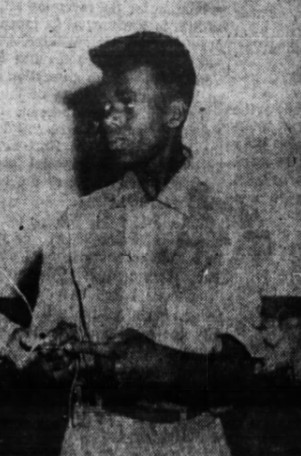
In the first six months of 1954, a wave of terror gripped the neighborhoods of Upper Manhattan as a predator stalked women in the presumed safety of their own apartment buildings. The press dubbed him "The Dreaded Strangler," a name that conveyed the city's fear. The man behind the moniker was Norman Roye, an 18-year-old whose life had been shaped by early tragedy and petty crime. In a spree that lasted just over five months, Roye attacked, robbed, sexually assaulted, and murdered three women, his violence escalating with each brutal act. His reign of terror ended as bizarrely as it had been conducted; he was arrested while loitering at the scene of his final murder, calmly watching the police he had summoned with an anonymous call. Roye confessed in detail, was swiftly tried and convicted, and at the age of 20, was executed in the electric chair at Sing Sing Prison, closing a dark chapter in New York City's history.
Early Life and Background
Norman Roye was born in New York City on September 6, 1935. His early years were marked by profound loss and instability. When he was just eight years old, both of his parents died, leaving him and his sister in the care of their grandmother. Growing up in Harlem, Roye’s path began to diverge from that of his peers. He fell into a pattern of delinquency, committing minor thefts and other petty offenses.
This behavior culminated in his being sent to the Warwick State Training School for Boys, a reformatory in upstate New York, in November 1951. During his time there, he discovered a talent and passion for baseball. He became a skilled player, and upon his release, he joined his school's team. He harbored dreams of a future in the major leagues, a stark contrast to the criminal activities he was simultaneously pursuing. Despite the structure and discipline that sports might have offered, Roye admitted to police after his arrest that he was also committing purse snatchings and stealing from parked trucks across the city. This duality—the aspiring athlete and the burgeoning criminal—defined his teenage years and hinted at the violent turn his life was about to take. He was unemployed at the time of the murders, having left his most recent job as a delivery boy.
The Murders
The transition from petty thief to murderer occurred on the night of January 2, 1954. Roye’s first victim was Margaret Branch, a 40-year-old woman who lived in a Harlem apartment complex. Roye stalked her as she walked home, waiting for his moment. He attacked her in the hallway near her room, choking her into submission. He robbed her, then dragged her unconscious body to the fifth floor of the building. There, in a horrifying act of desecration, he raped her and then strangled her to death with one of her own Christmas stockings, which he had found among her belongings. He left her body in the hallway and vanished into the night.
For nearly five months, the city remained unaware that a serial killer was in its midst. Then, on May 28, 1954, Roye struck again. His target was Kathleen Stewart, a 25-year-old mother. Roye first saw her in a subway station and followed her as she made her way home to her apartment building near the Harlem River. He confronted her in the building's hallway, brandishing a Boy Scout knife to intimidate her. He forced her out of the building and into an adjacent parking lot. There, he sexually assaulted her twice before binding her hands behind her back with a cord. He then strangled her to death and left her body between two parked cars.
The final and most brazen murder took place just ten days later, on the evening of June 7, 1954. Isadora Goomes, a 66-year-old widow, was returning to her apartment at 201 West 120th Street. As she entered the vestibule, Roye, who had been lying in wait, ambushed her. He threw a crude, pre-fashioned noose made of clothesline rope around her neck and demanded her money. The elderly woman, terrified, could only produce five pennies from her purse. Enraged by the paltry sum, Roye tightened the noose with brutal force. He later told police, "She just died on me." He took the five cents and left her body slumped in the hallway where she had fallen.
The Victims
- Margaret Branch, 40 — On January 2, 1954, Ms. Branch, a resident of Harlem, was ambushed in her apartment building. She was robbed of a small amount of money, sexually assaulted, and brutally strangled with a holiday stocking.
- Kathleen Stewart, 25 — A young mother, Ms. Stewart was followed from the subway to her building on May 28, 1954. She was forced into a nearby parking lot, where she was assaulted and strangled, leaving behind her family.
- Isadora Goomes, 66 — A widow, Ms. Goomes was attacked in the vestibule of her apartment building on June 7, 1954. She was strangled to death with a rope for the five pennies she carried in her purse.
Investigation and Capture
The murder of Isadora Goomes set in motion a chain of events that would lead to the swift capture of "The Dreaded Strangler." After killing Goomes for a nickel, Roye walked to a nearby store and used the coins to buy a box of crackers. In a display of chilling detachment, he returned to the scene of the crime. Before police arrived, he made an anonymous phone call to the press, and possibly the police, to report the discovery of a body. He then joined the growing crowd of onlookers, casually eating his crackers as detectives from the 28th Precinct began their investigation.
Two detectives, William J. O'Brien and John J. McGuire, noticed the 18-year-old lingering at the edge of the police lines. There was something unsettling about his calm demeanor and intense focus on their work. He seemed too interested, too detached. Their suspicion piqued, they approached Roye and began to question him. His answers were evasive and contradictory. The detectives brought him to the precinct headquarters for further interrogation.
Under the questioning of Assistant Chief Inspector John J. O'Connell, Roye's composure crumbled. Within hours, the full, horrifying story came pouring out. He not only confessed to the murder of Isadora Goomes but also admitted to killing Kathleen Stewart and Margaret Branch. He provided investigators with meticulous, signed statements for each murder, recounting details that only the killer could have known. He described the weapons he used—the Christmas stocking, the cord, the clothesline rope—and the specific locations of the attacks. He claimed robbery was his primary motive, but his confessions detailed the sexual assaults that accompanied two of the murders. He told police he had committed around 50 muggings in the preceding months. The search for the Harlem strangler was over.
Trial and Sentence
Norman Roye was indicted for the first-degree murder of Isadora Goomes. The prosecution, led by Assistant District Attorney Vincent J. Dermody, built its case primarily on Roye's detailed and signed confessions. When the trial began in January 1955, the key evidence presented to the jury of eleven men and one woman was Roye's 14-page statement.
In court, Detective O'Brien testified about the bizarre circumstances of Roye's arrest, describing how he was found watching the investigation unfold. He recounted Roye's chillingly casual admission, "I am the fellow that did it." The prosecution read Roye's confession aloud, which detailed the calculated nature of the crime. Roye described making the noose from a clothesline and waiting in the vestibule for a victim. He recounted his anger at finding only five cents and the final act of tightening the rope.
Roye’s defense attorney, James J. McDonough, attempted to have the confession thrown out, arguing it had been coerced. Roye took the stand in his own defense, recanting his statement and claiming that detectives had beaten him to force a confession. He testified that he was merely a bystander who was wrongfully arrested. However, his credibility was shattered under cross-examination by Dermody, who highlighted the wealth of accurate detail in the confession that police could not have fabricated.
On February 4, 1955, after deliberating for just over four hours, the jury returned a verdict: guilty of first-degree murder. Crucially, they did not add a recommendation for mercy. Under New York law at the time, this made the death penalty mandatory. On March 5, 1955, Judge Jonah J. Goldstein formally sentenced Norman Roye to die in the electric chair. The 19-year-old showed no emotion as the sentence was handed down.
Aftermath and Legacy
Norman Roye was sent to the death house at Sing Sing Prison in Ossining, New York, to await his execution. He spent nearly a year on death row. During this time, he reportedly became deeply religious and spent his final months reading the Bible. He received no visitors.
His case had unfolded in the public eye alongside that of another young serial killer, 20-year-old John Francis Roche, the "Mad Killer of Yorkville," who had murdered several people in a separate spree. The simultaneous hunts for two unrelated serial stranglers in Manhattan created an atmosphere of intense public anxiety during the summer of 1954. The press often ran their stories side-by-side, creating a narrative of a city under siege.
In a grim coincidence, both men were scheduled for execution in the same week. On January 19, 1956, Norman Roye walked his final steps to the execution chamber. For his last meal, he had requested and received roast chicken and steak. When asked if he had any last words, he simply shook his head. At 11:04 p.m., the sentence was carried out. Norman Roye was pronounced dead at the age of 20. John Francis Roche followed him to the electric chair less than 24 hours later.
The case of "The Dreaded Strangler" stands as a disturbing footnote in New York's criminal history. It is a story of a troubled youth whose dreams of a baseball career were eclipsed by a descent into horrific violence. The randomness of his attacks, the brutality of his methods, and the chilling manner of his capture left a scar on the city, a grim reminder of the darkness that can lurk just beneath the surface of everyday life.