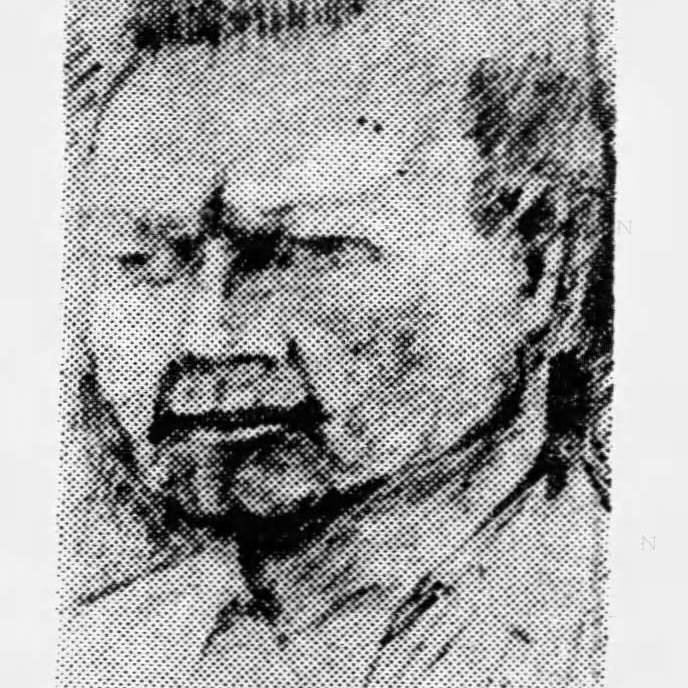
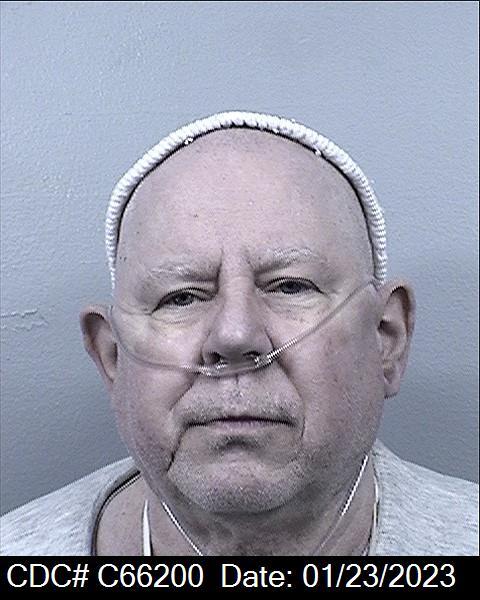
Gerald Thomas Archer: The London Chambermaid Slayer
Overview
Between 1969 and 1971, a series of brutal murders targeting middle-aged female hotel employees instilled fear in the communities of Southwestern Ontario. The man responsible, Gerald Thomas Archer, became known as "The London Chambermaid Slayer." Though convicted for only one of the slayings in his lifetime, the full scope of his crimes would only be confirmed years after his death, revealing a cold-blooded predator who preyed on vulnerable women in their own homes. Archer was convicted of one murder, paroled after 14 years, and died a free man, his secrets eventually brought to light by his own family and the advance of forensic science.
Early Life and Background
Gerald Thomas Archer was born in London, Ontario, in 1932. By 1950, at the age of 18, he had already established a criminal record with offenses that included robbery, breaking and entering, and possession. Details about his upbringing and family life are scarce, but his early adulthood was marked by instability and a clear disregard for the law.
In 1966, Archer began a pen-pal correspondence with a woman named Mary. They met in person for the first time in December 1967 and, in a whirlwind romance, were married just eleven days later. The couple initially lived in Merlin, Ontario. In October 1970, they relocated to Chatham, settling on Adelaide Street South, unknowingly placing Archer in close proximity to his final victim.
The First Murder: Jane Wooley
The reign of terror began on January 31, 1969, in London, Ontario. Jane Wooley, a 62-year-old chambermaid at the London House hotel, was found murdered in her York Street apartment. Her body was discovered on February 3 by a concerned friend who went to check on her.
The scene was one of extreme violence. Wooley had been beaten and stabbed to death. Her clothes had been mostly removed, and money was stolen from her purse. Investigators at the time concluded that the motive was likely a sexual assault that had escalated to murder. With no witnesses and limited forensic technology, the case quickly went cold, leaving the community on edge.
The Second Murder: Edith Authier
Over a year and a half later, on September 4, 1970, Archer struck again, this time in the small town of Merlin. His victim was 57-year-old Edith Authier, a chambermaid at the William Pitt Hotel in nearby Chatham. Her body was found the following day by a neighbor who had come to pick her up for their carpool to work.
Authier had been savagely beaten and stabbed in her William Street home. Evidence showed she had also been sexually assaulted before her death, and, like Jane Wooley, money had been taken from her purse. The similarities to the Wooley case were alarming, but without a clear suspect or definitive link, the two investigations remained separate and unsolved.
The Final Murder: Belva Russell
The final murder, and the one that would lead to Archer's capture, occurred on January 23, 1971, in Chatham. Belva Russell, a 57-year-old chambermaid at the Merrill Hotel, was attacked and beaten to death in her apartment on Adelaide Street South — the same street where Archer was then living with his wife.
The discovery was made just moments after the attack. Russell's common-law husband, Reginald Tomlinson, was returning home around 2:00 a.m. when he encountered an unfamiliar man hastily exiting the apartment building. Rushing inside, he found Russell's body. Her clothing had been partially removed, leading police to believe the motive was an attempted rape. Tomlinson's brief but crucial sighting of the fleeing man would prove to be the key to breaking the case.
The Victims
The women murdered by Gerald Thomas Archer were hardworking individuals, targeted for their perceived vulnerability.
- Jane Wooley, 62 — Killed on January 31, 1969, in London. She was a dedicated chambermaid at the London House hotel and was attacked in the perceived safety of her own apartment.
- Edith Authier, 57 — Killed on September 4, 1970, in Merlin. A chambermaid at the William Pitt Hotel, she was a widow who lived alone and was known to carpool to work with her neighbors.
- Isobella "Belva" Russell, 57 — Killed on January 23, 1971, in Chatham. She worked as a chambermaid at the Merrill Hotel and lived with her common-law husband, whose return home tragically coincided with the moments after her murder.
Investigation and Capture
The murder of Belva Russell provided investigators with their first solid lead. Reginald Tomlinson gave police a description of the man he saw running from the building. Based on this, detectives brought Gerald Thomas Archer in for questioning on February 12, 1971.
Tomlinson positively identified Archer in a police lineup. Coupled with fingerprint evidence, police had enough to arrest him and charge him with the non-capital murder of Belva Russell. At the time, due to a lack of inter-jurisdictional data sharing and forensic capabilities, police did not definitively link him to the murders of Wooley and Authier, though the similarities in victimology and method were noted by some.
Trial and Sentence
Gerald Thomas Archer's trial for the murder of Belva Russell began in June 1971 in Kent County, presided over by Mr. Justice W.F. Donahue. The prosecution's case hinged on the powerful eyewitness testimony of Reginald Tomlinson. After deliberating, the twelve-man jury returned a verdict of guilty of non-capital murder.
Upon hearing the mandatory sentence of life imprisonment, Archer showed no remorse. Instead, he defiantly shouted, "That's only the first strike against me. The ball game isn't over yet!" The ominous statement was a chilling, private admission of his other crimes, a secret he would keep for the rest of his life.
A Killer Walks Free
Despite the life sentence, under Canadian law at the time, Archer became eligible for parole. In 1985, after serving just 14 years for the brutal murder of Belva Russell, he was released from prison.
Following his release, Archer became a drifter. He lived a transient life, moving between cheap hotels and spending his time in bars. On a day in 1995, Gerald Thomas Archer died of a heart attack. His body went unclaimed by his family, and the man known as the Chambermaid Slayer was buried in an unmarked grave in a potter's field. For a time, it seemed the full truth of his violent life had been buried with him.
Aftermath and Legacy
The story did not end with Archer's death. Five years later, in 2000, his estranged wife and daughter came forward to the police with a dark secret. They revealed that Archer, in a drunken state, had confessed to them that he had killed Edith Authier.
This stunning revelation prompted police to reopen the cold cases. Authorities obtained permission to exhume Archer's remains in February 2000 to collect DNA samples—a tool unavailable during the original investigations. The DNA profile extracted from Archer's body was a match to DNA recovered from cigarette butts that had been meticulously collected and preserved from the 1969 crime scene at Jane Wooley's apartment.
The confession and the DNA match posthumously proved what investigators had long suspected: Gerald Thomas Archer was responsible for all three murders. He was a serial killer who had managed to serve only a fraction of the time for his crimes and had died a free man. The case stands as a stark example of the limitations of early forensic science and the enduring pain of victims' families, who had to wait decades for the complete truth to be officially recognized.