Russell Maurice Johnson: The Bedroom Strangler
Overview
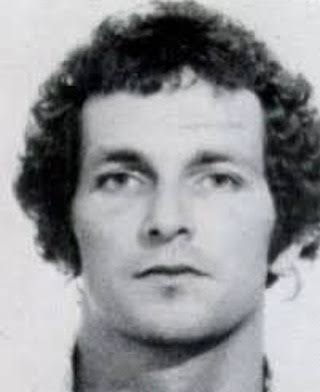
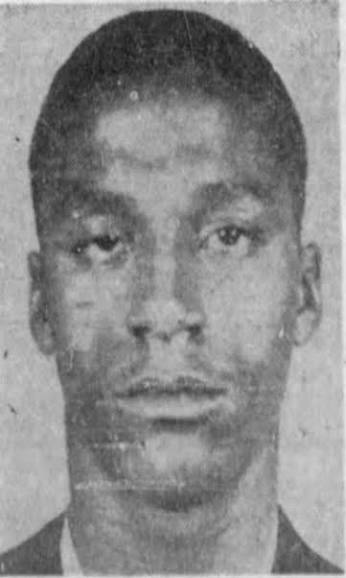
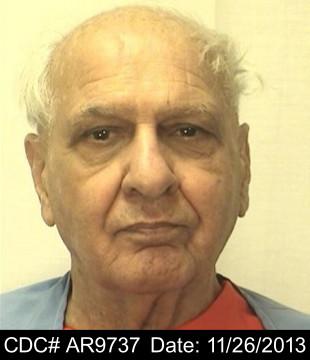
Between 1973 and 1977, the communities of London and Guelph in Ontario, Canada, were stalked by a predator who entered women's apartments in the dead of night. Known as "The Bedroom Strangler," Russell Maurice Johnson was a serial rapist and killer who used his strength and agility as a bodybuilder to scale apartment buildings, sometimes climbing many stories to access balconies and unlocked doors. He murdered at least seven women, and his crimes were marked by a chilling evolution from meticulous staging to overt violence. For years, his early victims were believed to have died of natural causes, a deception that allowed him to continue his reign of terror undetected. His eventual capture and confession brought to light a series of brutal attacks that had baffled investigators and terrified two cities.
Early Life and Background
Russell Maurice Johnson was born in St. Thomas, Ontario, in 1947. On the surface, he led an unremarkable life, working for the Ford Motor Company in Talbotville and as an auto store clerk. He was a dedicated weightlifter and bodybuilder, a hobby that gave him the formidable strength he would later use in his crimes. Beneath this veneer of normalcy, however, Johnson harbored deep-seated psychological issues. In 1969, he voluntarily admitted himself to the London Psychiatric Hospital, where he was diagnosed as a sexual deviant. Despite the diagnosis, he received little effective treatment and was released. Johnson was described as being obsessed with cleanliness, a compulsive hand-washer who wore gloves and used petroleum jelly at work and the gym. This obsessive trait would later manifest in the disturbing tidiness of his first crime scenes.
The "Natural Cause" Murders
Johnson began his killing spree in the fall of 1973. His first four murders were carried out with such stealth and care that medical examiners initially suspected no foul play. He would stalk his chosen victims, enter their apartments while they slept, and watch them for hours before suffocating or strangling them. He would then clean the scene and pose the bodies to make it appear as if they had died peacefully in their sleep.
The first known victim was Mary-Catherine Hicks, a 20-year-old university student in London, on October 19, 1973. She was found tucked into her bed, and with no signs of violence, her death was attributed to a possible allergic reaction to medication. A month later, on November 30, 1973, 42-year-old Alice Jane Ralston was found dead in her Guelph apartment. Her death was ascribed to arteriosclerosis, or hardening of the arteries.
On March 4, 1974, the body of 27-year-old Eleanor Hartwick was discovered in her London home. As with the previous victims, her death was believed to have been caused by a reaction to prescription drugs. The last of the initially undetected murders occurred on August 8, 1974. Doris Brown, 49, was found dead in her Guelph apartment by her daughter. Although a pathologist noted minor abrasions and blood in her throat and rectum, the official cause of death was listed as pulmonary edema. In each case, Johnson's meticulous cleanup had successfully deceived authorities.
Escalation to Violence
The nature of Johnson's crimes shifted dramatically on New Year's Eve, 1974. His fifth victim, 23-year-old Diane Beitz, was found in her Guelph apartment by her fiancé, just one day after they had become engaged. There was no doubt that she had been murdered. Beitz had been strangled with her own brassiere, her hands were tied behind her back with a nylon stocking, and she had been sexually assaulted after death. The brutal and overt violence of the crime launched a major police investigation, but for three years, the case went cold.
After a hiatus of more than two years, Johnson struck again. On April 15, 1977, Louella Jeanne George, 23, was found dead in her fourth-floor London apartment after she failed to show up for her job as a hospital cashier. Johnson had climbed the building to her balcony to gain entry. She had been strangled and sexually assaulted post-mortem. Johnson stole some of her jewelry and underwear, which were later discovered in a nearby trash can.
The final murder occurred on July 15, 1977. Donna Veldboom, 22, who lived in the apartment directly above Johnson's in London, was found by concerned coworkers. Johnson had once again entered through a balcony door. He strangled and stabbed Veldboom, leaving a slash across her chest. He later told police he had wanted to crawl inside her to feel warm and safe. In a final act of his obsessive ritual, he bathed her body and posed it in her bed.
The Victims
- Mary-Catherine Hicks, 20 — October 19, 1973, in London. A senior at the University of Western Ontario, she was found in her bed and her death was initially ruled as accidental.
- Alice Jane Ralston, 42 — November 30, 1973, in Guelph. Her death was mistakenly attributed to a pre-existing medical condition of hardened arteries.
- Eleanor Diane Hartwick, 27 — March 4, 1974, in London. She was found in her home, and investigators initially believed she died from a reaction to prescription medication.
- Doris Ethel Brown, 49 — August 8, 1974, in Guelph. A divorced mother, she was found by one of her children; her death was attributed to pulmonary edema despite suspicious findings.
- Diane Beitz, 23 — December 31, 1974, in Guelph. She was found by her fiancé the day after their engagement, having been violently strangled and assaulted.
- Louella Jeanne George, 23 — April 15, 1977, in London. A hospital cashier who was engaged to be married, she was found by a coworker after not showing up for work.
- Donna Veldboom, 22 — July 15, 1977, in London. Described as popular with a great social life, she had moved to Ontario from New Brunswick less than a year before her murder.
Investigation and Capture
The murder of Donna Veldboom proved to be Johnson's undoing. As police investigated the tenants of her apartment building, they cross-referenced the list with their records of known sexual offenders. Russell Johnson's name emerged. He not only lived in the building but had a prior diagnosis of sexual deviancy and had also previously resided in the same building as victim Louella George.
Further investigation revealed another suspicious connection. On the morning Diane Beitz's body was discovered in Guelph, Johnson had called police to the area to report his car had been broken into, a vehicle parked just around the corner from the crime scene. With this information, police placed Johnson under 24-hour surveillance. They quickly noted his obsessive-compulsive behaviors, including excessive hand-washing. On July 28, 1977, Russell Maurice Johnson was arrested. He quickly confessed to the murders of Beitz, George, and Veldboom. To the shock of investigators, he then went on to admit his responsibility for the four earlier deaths that had been dismissed as natural or accidental, and also confessed to at least 11 other non-fatal sexual assaults.
Trial and Sentence
In January 1978, Russell Johnson was brought to trial before the Ontario Supreme Court, charged with the first-degree murders of Diane Beitz, Louella George, and Donna Veldboom. He initially pleaded not guilty. At his trial, Johnson claimed he was driven by an "uncontrollable urge" to rape and kill, and stated that he would not have killed if he had received proper medical treatment following his 1969 diagnosis.
Based on his detailed confessions and psychiatric evaluations, which diagnosed him with sexual sadism, necrophilia, and other disorders, the court found him not guilty by reason of insanity on February 1, 1978. The verdict was reached because he was deemed unable to grasp the gravity and wrongfulness of his actions. Johnson was ordered to be confined indefinitely at the Oak Ridge maximum-security wing of the Mental Health Centre in Penetanguishene, now known as the Waypoint Centre for Mental Health Care.
Aftermath and Legacy
The investigation into the Bedroom Strangler's crimes was, at the time, the most expensive in Ontario's history. Following the trial, police released a complete dossier of the crimes Johnson had admitted to, officially closing the cases of Mary-Catherine Hicks, Alice Ralston, Eleanor Hartwick, and Doris Brown.
Johnson remains confined at the Waypoint Centre. He has undergone chemical castration with the drug Lupron to reduce his testosterone levels. Despite this, psychiatrists have noted that he does not believe he needs to change his behavior. He has made numerous applications over the years to the Ontario Review Board for more lenient conditions or transfers to less secure facilities, including a 2012 request that was denied by the Ontario Court of Appeals. These hearings are consistently attended by the families of his victims, who have strenuously and successfully objected to any loosening of his confinement, ensuring that the man who brought terror to their lives remains behind the walls of a secure institution.