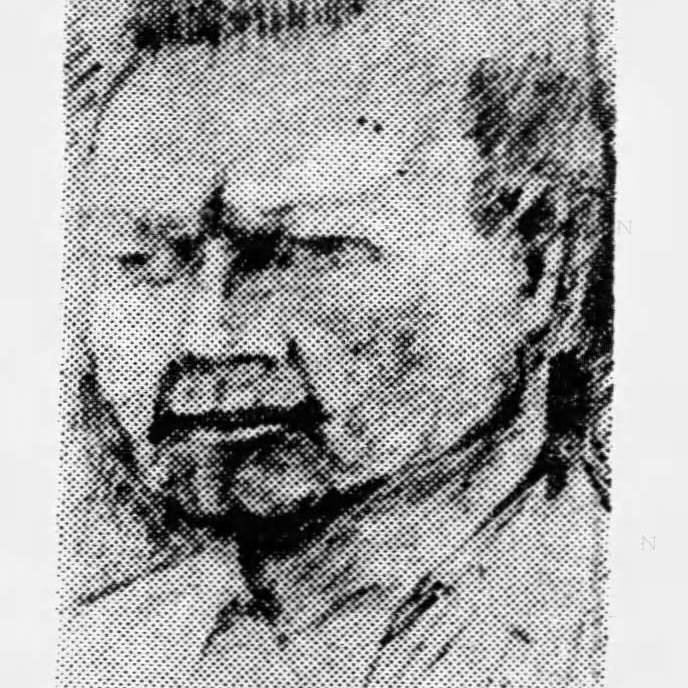
Clifford Gayles: The Ohio Parolee Killer
Overview
Clifford William Gayles was a convicted murderer who, after being paroled, embarked on a violent crime spree in the late summer of 1947 that terrorized southwestern Ohio. Over a span of thirteen years, Gayles was responsible for the deaths of three people, beginning with the murder of his girlfriend in 1934. His early release from prison for this crime would later become a subject of intense debate and scrutiny. In 1947, accompanied by his young girlfriend, Gayles committed two more murders and a series of other violent acts over a single weekend. His eventual capture after a month-long manhunt brought a temporary end to the fear he had instilled, and his subsequent trial and execution marked the final chapter in a life defined by brutal violence.
Early Life and Background
Clifford William Gayles was born in Cincinnati, Ohio, in 1913. Little is known about his childhood and upbringing. The only glimpse into his early years came during his 1947 murder trial, when an aunt testified on his behalf. She claimed that Gayles had undergone a significant personality change after being struck in the head with an axe at the age of sixteen. According to his aunt, he had been "acting strangely" ever since the incident. This detail was presented as part of an insanity defense, though it failed to sway the jury. At the time of his 1947 crime spree, Gayles was married and had a fourteen-year-old son. His wife would later file for divorce and was granted custody of their child shortly before his execution.
The First Murder: Mamie Robinson Barnes
On the evening of October 5, 1934, a violent altercation erupted between a 21-year-old Clifford Gayles and his 25-year-old girlfriend, Mamie Robinson Barnes. Behind a YMCA in Cincinnati, the argument escalated until Gayles produced a knife and stabbed Barnes nine times in the heart. In a bizarre turn of events, Gayles did not flee the scene. Instead, he dropped the murder weapon in the alley and walked directly to a nearby police station.
There, he calmly confessed to the killing. Police officers, initially uncertain of the veracity of his statement, placed him in a cell while they went to investigate his claim. They soon discovered Barnes's body exactly where Gayles had said it would be. Upon their return to the station, they found Gayles sound asleep in his cell. When questioned by detectives, he offered no motive or explanation for the savage attack, simply stating that he had stabbed her. Charged with first-degree murder, Gayles was ultimately found guilty of second-degree murder and sentenced to life in prison.
Parole and a New Relationship
Clifford Gayles served ten years of his life sentence, the minimum time required before he became eligible for parole. On January 22, 1945, the Ohio Parole Board recommended his release, and he walked out of prison a free man. He returned to society and, over the next two years, began a relationship with Ada Davidson, a teenager from Xenia, Ohio. Ada lived with her older sister, Ollie, who strongly disapproved of the relationship, likely due to the age difference and Gayles's criminal past. This disapproval would set the stage for the tragic events to come.
A Labor Day Weekend of Terror
The simmering conflict between Gayles and Ollie Davidson came to a head on August 31, 1947. Gayles arrived at the Davidson sisters' home in Xenia with the intention of taking Ada on a trip for the Labor Day weekend. Ollie vehemently objected, forbidding her younger sister from leaving with him. Enraged by her defiance, Gayles pulled out a gun and shot Ollie in the thigh. He then fled with Ada, leaving Ollie gravely wounded. She was rushed to a hospital in Springfield but succumbed to her injuries a week later.
The violence did not end there. That same night, Gayles and Ada Davidson drove to the city of Franklin. There, they happened upon 33-year-old Edna Adkins and her ten-year-old son, Paul, who were sitting in their car waiting to pick up an acquaintance. Gayles, brandishing his gun, forced them out of their vehicle and took command of it, ordering Edna and Paul to accompany him. During the terrifying drive, Gayles subjected them to horrific abuse, pistol-whipping young Paul for being too noisy.
After some time, Gayles pulled over on a desolate road. He dragged Edna from the car into some nearby bushes, where he raped and shot her. He then returned to the car, beat Paul again, and threw him out of the vehicle before speeding away. Miraculously, both Edna and her son were found by passersby and taken to a hospital in Middletown. Tragically, Edna Adkins died from her injuries.
Still not finished, Gayles and Davidson continued their rampage in the Adkins' stolen car, heading toward Cincinnati. Near Glendale, they were involved in a car accident with another motorist, 45-year-old Edgar Rizzo of Cold Spring, Kentucky. An argument ensued, and Gayles brutally stabbed Rizzo multiple times. He then forced the injured man into his car and drove to Wyoming, another Cincinnati suburb, where he dumped Rizzo near a turnpike. Against all odds, Edgar Rizzo survived the vicious attack.
The Victims
Three lives were tragically cut short by the actions of Clifford Gayles.
- Mamie Robinson Barnes, 25 — On October 5, 1934, in Cincinnati, Mamie was killed by Gayles, her boyfriend at the time. She was a young woman whose life was violently ended in an act of unexplained rage.
- Ollie Davidson — In early September 1947, in Springfield, Ollie died from a gunshot wound inflicted by Gayles a week earlier in Xenia. She was trying to protect her younger sister from a man she rightfully distrusted.
- Edna Adkins, 33 — On August 31, 1947, near Franklin, Edna was a mother waiting in her car with her young son when she was abducted, brutally assaulted, and murdered. Her son, Paul, was also viciously attacked but survived to bear witness to the horror.
Investigation and Capture
In the wake of the brutal Labor Day weekend crime spree, law enforcement agencies across several Ohio counties launched a massive manhunt for Clifford Gayles and Ada Davidson. The scope of the search quickly widened, and the Federal Bureau of Investigation was called in to assist state authorities. For a month, the fugitive pair managed to evade capture. The trail eventually led investigators to New Orleans, Louisiana. On October 1, 1947, acting on a tip, FBI agents located and arrested Gayles and Davidson. Neither offered any resistance. They were promptly extradited back to Ohio to face a litany of charges, with the murder of Edna Adkins taking precedence.
Trial and Sentence
Before his trial for the murder of Edna Adkins, Clifford Gayles was ordered to undergo a psychiatric evaluation. The examination concluded that he was legally sane at the time of the crimes. Despite this, Gayles's defense attorney pursued an insanity defense. The primary witness for the defense was Gayles's aunt, who testified that he had suffered a head injury from an axe at age sixteen and had behaved strangely ever since. The jury was not convinced. They found Clifford Gayles guilty of first-degree murder and, recommending no mercy, sealed his fate with a mandatory death sentence. Throughout the sentencing, Gayles reportedly showed no emotion.
His accomplice, Ada Davidson, faced a different legal path. She pleaded guilty to a lesser charge of second-degree murder and was sentenced to life in prison.
Execution
Clifford William Gayles's final days were spent on death row at the Ohio Penitentiary. A few months before his scheduled execution, his wife was granted a divorce and given full custody of their son. On July 2, 1948, Gayles was led to the prison's electric chair. He was reported to have met his end calmly, praying until the first surge of electricity took his life. In a final, unusual gesture, Gayles had requested that his eyes be surgically removed after his death and donated to an eye bank in New York.
Aftermath and Legacy
The case of Clifford Gayles sent shockwaves through Ohio, not only because of the brutality of his crimes but also because he had been granted parole after his first murder conviction. His 1947 rampage sparked a fierce public debate about the state's parole procedures. The Ohio Parole Board faced intense criticism and scrutiny for its decision to release a man who had already demonstrated a capacity for lethal violence. The case highlighted the difficult and often fraught process of assessing a prisoner's potential for rehabilitation and the tragic consequences of a misjudgment.
Ada Davidson, Gayles's young accomplice, served just over ten years of her life sentence. She was released on parole on February 20, 1958, and disappeared from the public record. The story of Clifford Gayles serves as a grim reminder of the failures that can occur within the criminal justice system and the devastating human cost of a killer's rage.