Kenneth Law: The Online Poison Seller
Overview
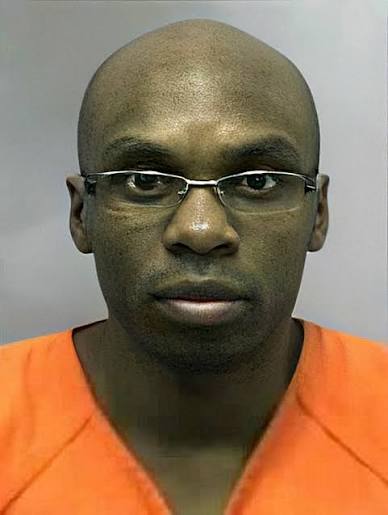
From his suburban home in Mississauga, Ontario, former hotel chef Kenneth Law orchestrated a global online enterprise that preyed on vulnerable individuals, selling a lethal substance disguised as a food additive. Between 2020 and his arrest in May 2023, Law shipped at least 1,200 packages containing sodium nitrite to people in more than 40 countries, leading to a devastating and widespread loss of life. Investigations have linked his products to at least 147 deaths worldwide, with victims as young as 14.
Law operated through a series of websites with innocuous names, hosted on mainstream e-commerce platforms, and actively participated in online suicide forums to promote his products. His operation was not a passive supply chain; he actively sought out and encouraged individuals at risk of self-harm. The case, unprecedented in Canadian legal history, culminated not in a murder trial but in a controversial plea deal. On May 29, 2026, Law pleaded guilty to 14 counts of counselling or aiding suicide for deaths within Ontario. In exchange, prosecutors agreed to withdraw 14 first-degree murder charges. The case has exposed critical vulnerabilities in online commerce and law enforcement's ability to police internet-enabled crime, leaving a legacy of profound grief and urgent questions about accountability in the digital age.
Early Life and Background
Kenneth Law was born in British Hong Kong in 1965 and immigrated to Canada with his family. He presented a profile of academic and professional achievement that gave no hint of his future crimes. Law was highly educated, holding degrees in engineering and business from respected Canadian universities. Before his arrest, he was employed as a chef at a luxury hotel in downtown Toronto. This seemingly conventional life masked the complex operation he was running from his home, using his knowledge to build an international business centered on death. According to court documents, Law later told a psychiatrist he believed he was "trying to serve a need that I thought was humane" and not a "diabolical madman."
The Online Operation
Beginning in late 2020, during the isolation of the COVID-19 pandemic, Law launched his deadly business. He created several websites with names designed to avoid suspicion, such as Imtime Cuisine, AmbuCA, and Escape Mode. Through these online storefronts, hosted on platforms like Shopify, he sold industrial-grade sodium nitrite, a chemical compound used for curing meat that is highly toxic and lethal when ingested in pure form. He also sold other paraphernalia that could be used for self-harm, such as masks and tubing.
Law's methods were calculated and deceptive. He actively participated in online forums dedicated to discussions of suicide, using the alias "Greenberg" to market his products and direct vulnerable people to his websites. An agreed statement of facts presented in court confirmed Law was fully aware that his customers intended to use the substance to end their lives. He shipped over 1,200 packages to 41 countries, including at least 160 within Canada. Financial records revealed the profitability of his enterprise; e-commerce platforms like Shopify and PayPal paid him nearly $300,000 in proceeds from his sales. In some cases, he even advised customers to destroy evidence.
The Victims
Kenneth Law's actions left a trail of grief that spanned continents, affecting families from all walks of life. The 14 proven victims in Ontario, for whose deaths he was convicted, ranged in age from 16 to 36. Their stories, shared by heartbroken families, paint a devastating picture of the human cost of his business.
- Ashtyn Prosser, 19 — A young man from Windsor who died on March 31, 2022. His mother, Kim Prosser, described him as a "brilliant, funny and colourful kid" whose mental health struggles began during the pandemic lockdowns. She has been a vocal advocate for justice, enduring the pain of hearing her son's name read in court.
- Stephen Mitchell Jr., 21 — Died in 2023 in the Toronto area. His father, Stephen Mitchell Sr., spoke powerfully outside the courthouse, stating that Law had robbed his son of the chance to overcome his depression. He credited grieving families abroad for raising the alarm that ultimately led to Law's arrest.
- Jeshennia Bedoya Lopez, 18 — An Aurora resident who had just graduated high school and died on September 10, 2022. Her father, Leonardo Bedoya, found his only daughter in her room, an experience he described as a permanent source of anguish. Her parents have since filed a civil lawsuit against Law.
- Maurizio Vadala, 36 — Died in Mississauga on March 15, 2023. His sister, Adrienne Dalli, told the court it was devastating to know that during a vulnerable period, her brother "encountered guidance towards death instead of support."
The names of several other victims, including Tyler Bryson, 34, Amara Scott, 25, and Amritraj Rana, 21, were shared by their families during Law's sentencing hearing. The names of the remaining victims in the Ontario convictions have not been publicly released. Beyond Canada, Law's poison has been linked to an ever-growing number of deaths. As part of his plea, he admitted responsibility for 79 deaths in the United Kingdom. Authorities in the United States, Italy, Australia, and New Zealand have also investigated deaths connected to packages he sent.
Investigation and Capture
The unravelling of Kenneth Law's global operation began not with a police task force, but with the determination of a grieving father. After his 22-year-old son Tom died in 2021, David Parfett in the U.K. began investigating the source of the poison his son had obtained. His inquiries led him to a reporter for The Times of London, who launched an undercover investigation. Posing as a vulnerable buyer, the journalist recorded a phone call with Law, who confirmed he was selling the substance for self-harm.
The Times published its explosive report on April 25, 2023. This public exposure finally spurred law enforcement into action. On May 2, 2023, Peel Regional Police arrested Law at his Mississauga home, initially charging him with two counts of counselling or aiding suicide. As the immense scale of his operation became apparent, a joint investigation involving 11 Ontario police forces was established. The charges against Law steadily mounted, from 14 counts of aiding suicide to 14 counts of second-degree murder, which were later upgraded to first-degree murder in January 2024, suggesting prosecutors believed they could prove premeditation.
Trial and Sentence
The prosecution of Kenneth Law was set to be a landmark case in Canadian law, testing the boundaries of whether selling a legal substance with malicious intent could constitute murder. However, the legal path was complicated. Law's trial was repeatedly delayed as the Crown awaited a crucial decision from the Supreme Court of Canada in an unrelated case concerning the legal distinction between aiding suicide and murder.
In December 2025, the Supreme Court declined to issue a definitive ruling, leaving in place a lower court decision that made a murder prosecution against Law "impossible," according to the Crown. That precedent suggested that to prove murder, the prosecution would have to show Law had not only supplied the substance but had also "overbore the victim's free will."
Faced with this legal obstacle, the Crown entered into a plea agreement. On April 18, 2026, Law's lawyer announced a deal had been reached. On May 29, 2026, Law appeared in a Newmarket, Ontario, court and pleaded guilty to all 14 counts of counselling or aiding suicide. In exchange, the 14 first-degree murder charges would be withdrawn following his sentencing. As part of the agreement, Law also formally admitted his role in 79 deaths in the United Kingdom, which would be considered an aggravating factor during his sentencing. Aiding suicide carries a maximum sentence of 14 years in prison in Canada.
Law's sentencing hearing began in September 2026. The court scheduled four days to hear 74 victim impact statements from devastated family members in Canada and the U.K., many of whom traveled to confront Law in person. Their raw, emotional accounts detailed the unending grief, anger, and emptiness left in the wake of his actions.
Aftermath and Legacy
The resolution of the Kenneth Law case through a plea deal has been met with widespread outrage and a sense of incomplete justice from victims' families around the world. Many, like David Parfett, felt the withdrawal of murder charges was a missed opportunity to set a legal precedent for online crimes. In the U.K., the National Crime Agency opted not to seek Law's extradition, agreeing to have his offenses there considered as part of the Canadian sentencing to avoid legal complications.
The case has cast a harsh light on the failure of both law enforcement and major tech companies to prevent such a tragedy. A CBC documentary, "The Poison Seller," examined evidence suggesting that authorities had been alerted to Law's activities months before his arrest but failed to act decisively. It also highlighted the role of e-commerce giants like Shopify, which hosted Law's stores and processed his payments, raising profound questions about corporate responsibility.
In the wake of the case, families and advocates are calling for stronger regulations on the sale of potentially lethal substances online and greater accountability for the platforms that enable such commerce. Civil lawsuits have been filed, and the case has become a tragic catalyst for conversations about mental health support and online safety. Kenneth Law's deadly business serves as a chilling testament to the dark potential of the internet to exploit the most vulnerable on a global scale, leaving a legacy of shattered lives and a demand for systemic change.