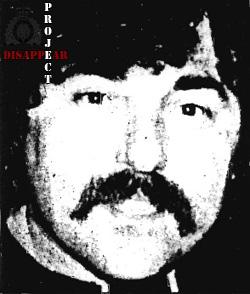
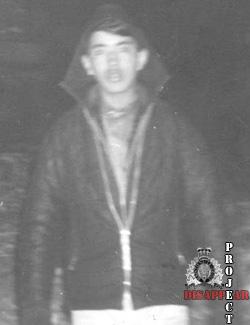
Clifford Laird McKell was a 19-year-old male who disappeared from the Snow Lake area of Manitoba on May 19, 1958, during what appears to have begun as an ordinary evening outing with a friend. After supper, Clifford and his friend set out to try a new canoe that the friend had recently obtained. The two young men headed onto the lake despite conditions that were reportedly rough, and available accounts of the case indicate that neither of them was considered an experienced paddler.
At about 8:30 that evening, a witness later interviewed by police reported seeing the two men traveling south in the canoe. The witness also remembered the water being rough at the time, a detail that would become especially significant once Clifford and his companion failed to return. There is no indication in the available accounts that either man was seen safely on land again after they were observed on the water.
Concern arose the following day when Clifford and his friend did not report for work. Their unexpected absence prompted a search, with authorities and others attempting to determine what had happened after the pair ventured onto the lake. An aerial search produced troubling evidence: the canoe was located overturned, and searchers also found paddles and safety cushions associated with it. The discovery strongly suggested that something had gone seriously wrong while the two men were on the water. With the canoe found overturned and the lake having been rough the previous evening, the search increasingly centered on the possibility that the men had been thrown into the water or that their canoe had capsized. The circumstances offered searchers a likely explanation for the disappearance, but finding the canoe and equipment did not immediately answer the most important question of where the two young men were.
The search eventually brought a devastating development when the body of Clifford's companion was recovered along the shoreline. Clifford, however, was never located. Despite the recovery of the other man and the physical evidence connected to the canoe, no confirmed trace of Clifford was found that could bring the same certainty to his family. The circumstances have consequently led to the belief that Clifford also drowned after the canoe overturned, but his body was never recovered. Available missing-person information continues to identify him as a missing person associated with the Royal Canadian Mounted Police in Manitoba. The absence of recovered remains means that, even though the evidence points strongly toward a fatal boating accident, Clifford's disappearance has never had the physical resolution that came with the recovery of his companion.
More than six decades later, Clifford Laird McKell's case remains a poignant example of how a brief recreational outing can become an enduring missing-person investigation. What is known forms a relatively clear sequence: Clifford and a friend left after supper to try a newly acquired canoe, they were seen traveling south across rough water that evening, neither reported for work the next day, and a search subsequently located their overturned canoe along with paddles and safety cushions. The body of Clifford's friend was eventually found along the shore, while Clifford himself was never recovered. No available account points to foul play or to Clifford intentionally disappearing; instead, the known evidence has consistently supported the conclusion that the canoe capsized in difficult water and that he was lost in the lake. In overview, Clifford was a young man of only 19 whose disappearance began with an evening canoe trip near Snow Lake and ended with an extensive search, the discovery of an overturned canoe and his friend's body, but no recovery of Clifford himself, leaving his fate strongly presumed yet never fully resolved for those who continued to remember him.Last Seen: May 19, 1958