Crime Solvers Central
307 Cases Solved. Advancing justice for missing persons, unsolved homicides, unidentified and unclaimed remains.

Case Description

Any updates on this case? Let us know!
Summary based on 1 source
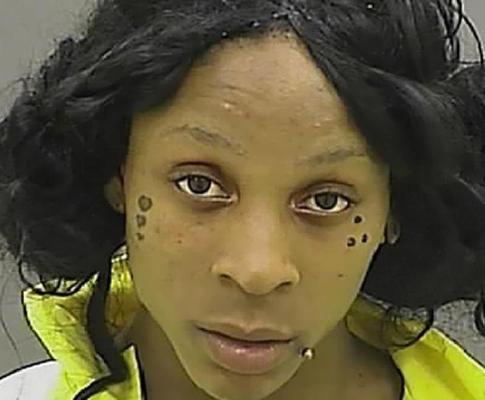
Mya Shawatza Hall, a 27-year-old Black transgender woman known to friends as Mya, was navigating a difficult period in her life in the spring of 2015. Friends remembered her as nice and friendly, but also as a troubled and lonely individual. At the time of her death, she was reportedly homeless, sometimes staying in an abandoned building in Baltimore, and was involved in sex work. Her friend Kayla Brooks, who worked at a transgender outreach program, recalled seeing Mya the day before she died, saying she "seemed high and was looking for a date." Court records indicated a past that included charges for prostitution, theft, and assault. One friend, Jamia Leonard, told a reporter she knew something was wrong in the days leading up to Mya's death, observing her talking to herself and moving restlessly between locations.

The series of events that led to her death began in the early hours of Monday, March 30, 2015. Mya and a companion, identified in law enforcement reports as 20-year-old Kevin Lamont Fleming of Baltimore, were picked up by a 60-year-old man and taken to the Terrace Motel in Elkridge, Maryland. They checked into a room around 7:30 a.m. About an hour later, the man reported that the pair had left, taking the keys to his Ford Escape SUV. Shortly before 9:00 a.m., while driving the stolen vehicle south from Baltimore, Mya took a wrong turn off the Baltimore-Washington Parkway. The exit led directly to a restricted-access vehicle control point at the National Security Agency (NSA) headquarters on the sprawling Fort Meade Army installation.

At the security gate, an NSA Police officer gave Mya routine instructions for turning around and leaving the secure campus. According to an NSA spokesperson, Mya did not obey the commands. Instead, the Ford Escape accelerated toward a marked NSA Police vehicle that was blocking the road. In response, NSA officers opened fire on the approaching SUV. The vehicle then crashed into the police car. The entire incident was contained to the perimeter checkpoint area. Aerial news footage showed the two damaged vehicles, one a white NSA Police SUV with a crumpled front end, and the other a dark, unmarked SUV.

Mya Hall died at the scene from the gunfire. Her passenger, Fleming, was shot and critically injured, and was transported to a local hospital for treatment. One NSA Police officer was also injured during the confrontation; he was treated at a hospital and released the same day. Initial reports, which often misgendered Mya and Fleming as "men dressed as women," fueled speculation about the motive, but the FBI, which led the investigation, quickly announced that the incident was not related to terrorism. Investigators reported finding a small amount of cocaine and a weapon in or near the stolen SUV.

The FBI and the U.S. Attorney's Office for Maryland conducted an investigation into the shooting. Less than three months later, in June 2015, federal and local authorities announced that no criminal charges would be filed against the NSA officers. U.S. Attorney Rod Rosenstein stated that video evidence showed Mya ignoring officers' commands and "racing toward the officer who fired at the vehicle." Based on this, prosecutors concluded that the officers had not committed any crimes and that there was no basis for federal charges. Howard County police also closed their investigation without bringing charges.

In the aftermath, Mya's death drew attention from LGBTQ advocates and media, who highlighted the initial misgendering by officials and in news reports and the stigmatizing narrative that first framed the incident. Her friend Jamia Leonard lamented the tragic outcome, telling a reporter, "I'm sure they didn't leave their house knowing that they wouldn't come home that day or that that would be the end." The case raised broader questions about the representation of transgender victims of state violence in media and official records. As of June 2015, the official investigation was closed, concluding that the use of deadly force was justified.

Links to Additional Sources (1)

See any mistakes? Let us know!