Crime Solvers Central
302 Cases Solved. Advancing justice for missing persons, unsolved homicides, unidentified and unclaimed remains.

Case Description

Any updates on this case? Let us know!
Summary based on 5 sources
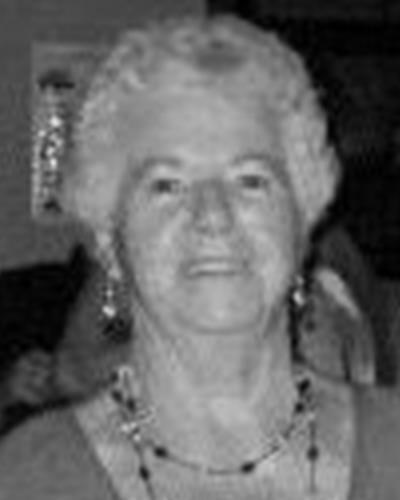
On the afternoon of June 24, 1994, 80-year-old Margaret McDonald was resting in her home on Lascelles Boulevard, in the quiet midtown Toronto neighborhood near Yonge Street and Davisville Avenue. A widow, she had plans to go out for dinner with a friend later that day. Her life, however, was cut short in an act of shocking brutality that continues to haunt investigators and the city decades later. The killing of the vulnerable elderly woman in the presumed safety of her own home remains one of Toronto’s most disturbing unsolved homicides.

That evening, Ms. McDonald's friend arrived for their dinner engagement around 5:30 p.m. but received no answer at the door. Growing concerned, the friend alerted a neighbor. It was ultimately Ms. McDonald's own granddaughter who made the horrific discovery inside the home shortly before 6 p.m. An intruder had forced his way into the residence, likely through a back sliding glass door, while Ms. McDonald was asleep in her bed upstairs. The house had been ransacked. The attacker then sexually assaulted, stabbed, and bludgeoned the elderly woman to death. Investigators noted the weapon used was a large pepper mill found at the scene, indicating it was a crime of opportunity that escalated with terrifying violence.

The Toronto Police Service launched an intensive investigation into what one detective would later call "one of the worst attacks" and "most horrific homicides" he had ever seen. The crime scene yielded crucial evidence, including fingerprints and a full DNA profile of an unknown male suspect. Despite this, a search of the national DNA databank produced no matches, and the case eventually went cold. Neighbors had reported seeing two strangers knocking on doors in the area earlier that day, but it was never confirmed if they were connected to the murder. Police believe the killer broke in intending to commit a burglary, not knowing the home was occupied, and then committed the murder upon finding Ms. McDonald.

Over the years, advancements in forensic science have allowed investigators to paint a clearer picture of the suspect. In 2016, using DNA phenotyping, police determined the killer is a male of primarily European ancestry, with dark hair and blue or intermediate-colored eyes. At the time of the murder in 1994, he was believed to be between 20 and 30 years old, which would place him in his 50s or 60s today. Investigators have theorized that the suspect lived in or was very familiar with the Yonge and Davisville area and may have known Ms. McDonald lived alone. They also suggested he likely had trouble maintaining intimate relationships with women during that period of his life.

Detectives with the Toronto Police cold case unit have repeatedly expressed their determination to solve the case. "This is one of the cases all of our investigators want nothing more than to solve," said Detective Sergeant Steve Smith. In a public appeal, former Detective Sergeant Stacy Gallant addressed those who might know the killer's identity directly, stating, "We have his DNA. All we need from you is his name." The case is considered one of 43 unsolved Toronto homicides where a suspect's DNA has been recovered.

As of January 2026, the murder of Margaret McDonald remains an active cold case. The Toronto Police Service is pursuing investigative genetic genealogy, a technique that has successfully solved other cold cases, in the hope of finally identifying the man responsible for the brutal crime. A $50,000 reward is available for information leading to the arrest and conviction of her killer. Anyone with information is urged to contact the Toronto Police homicide unit at 416-808-7400 or to provide a tip anonymously through Crime Stoppers at 416-222-TIPS (8477).