Crime Solvers Central
302 Cases Solved. Advancing justice for missing persons, unsolved homicides, unidentified and unclaimed remains.

Case Description

Any updates on this case? Let us know!
Summary based on 5 sources
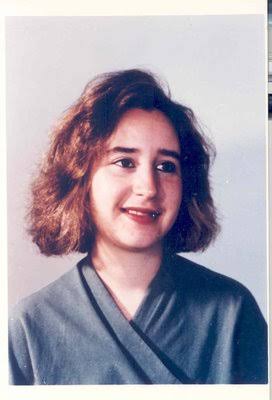
Margaret McWilliam was a 21-year-old woman with dreams of cycling across the continent, a student at Ryerson University who also worked as a receptionist and dining-room supervisor at a seniors' retirement residence. Friends and family from her hometown of Deep River, Ontario, remembered her as a "small town moral kid," quiet and conscientious. Margaret had moved to a basement apartment on Santamonica Boulevard in Scarborough and was preparing for a walking tour of England with her mother, Charlotte. To get in shape for the trip, she started jogging, discovering a path she found lovely and pleasant through Warden Woods Park, a wooded area with a stream near her home.

On the evening of Thursday, August 27, 1987, Margaret went for her usual run. She left her home around 7 p.m., wearing headphones connected to her Walkman as she jogged north toward St. Clair Avenue East and then west into the park. She never returned. The next day, when the ever-reliable Margaret failed to show up for work, her concerned colleagues contacted her landlord, who found her keys still hanging from the doorknob. Her parents, Charlotte and Ivan McWilliam, drove from Deep River to join the search, arriving to the sight of police cars lining the streets near the park. Later that day, August 28, officers from 41 Division, with the help of a Peel Regional canine unit, discovered Margaret's body in a heavily wooded section off the running path.

An autopsy revealed that Margaret had been ambushed, dragged into the woods, beaten, sexually assaulted, and strangled to death with a piece of her own jogging suit. Her face was bruised, and it was clear she had fought her attacker. Investigators believe the killer was lying in wait for her in the park and that her Walkman was stolen during the attack. Police theorized the perpetrator may have been someone who spent a lot of time in the park, possibly selling the device for a few dollars. The crime appeared to be a random act of violence; she was simply in the wrong place at the wrong time.

The Toronto Police Service Homicide unit launched an extensive investigation. A key piece of evidence found at the scene was a distinctive shoe print left by a Korean-made running shoe with vinyl tops and the letters "AAU" on the heel. The grey and white runners were sold exclusively at Bata Shoe Stores in Canada, leading the press to nickname the case the "Cinderella Murder." Witnesses reported seeing a large male loitering in the area around the time of the murder, described as a light-skinned Black man in his 30s with a thin moustache and a muscular build, wearing a red hat. He was gone when police returned to the area.

Years later, advancements in forensic science provided a major breakthrough. In 2000, investigators were able to develop a full DNA profile of the male suspect from skin cells found on Margaret's sweater. Despite this, the profile has never matched anyone in the National DNA Data Bank, meaning the killer has not been arrested for any other crime that would require a DNA sample to be collected. Over the years, police have regularly resubmitted evidence for testing as technology improves, hoping for new leads. Notorious criminals like Paul Bernardo and Russell Williams were looked at but ultimately ruled out as suspects.

Decades after their daughter’s murder, Margaret’s parents have continued to seek justice. "It was a terrible thing. He just can’t get away with it," her mother, Charlotte, said in a 2026 interview. Her father, Ivan, recalled the moment police confirmed their worst fears: "I just immediately said, ‘Is she alive?’ and the answer was no. We just collapsed." Toronto Police detectives remain committed to solving the case. "I need a name. We’ll do the rest," Detective Constable Andrew Doyle stated. "I still believe there is someone out there... that knows exactly what happened to Margaret."

As of February 2026, Margaret McWilliam's homicide remains an active and unsolved cold case with the Toronto Police Service. Investigators hold out hope that modern genetic genealogy techniques may finally identify the killer. A police reward of $100,000 has been offered for information leading to the arrest and conviction of the person responsible. Anyone with information is urged to contact the Toronto Police Service homicide division at 416-808-7400, by email at [email protected], or anonymously through Crime Stoppers at 416-222-TIPS (8477) or www.222tips.com.