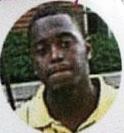
Richard Maloof was part of a large Boston family, one of six children born to Anna and Nadra Habeeb Maloof. He grew up alongside his siblings, brothers Frederick and Robert Habeeb, and sisters Mary and Madeline. For decades, the Maloof family was a presence in the city, with roots in Boston’s South End and later spreading to neighborhoods like Roslindale. Richard was 62 years old in the winter of 1973, a time when the city of Boston was grappling with social change and a climate of violence that left many residents on edge.
On the evening of Tuesday, February 20, 1973, the Boston Police Department received a call reporting a shooting. Officers were dispatched to 165 Washington Street in the Dorchester neighborhood, a long and historic thoroughfare that cuts through several of the city's districts. At the scene, they discovered Richard Maloof. He had been shot and was pronounced deceased.
The Office of the Chief Medical Examiner was called to the scene, and after an autopsy, the manner of his death was officially ruled a homicide.
The investigation into Richard’s murder fell to the Boston Police Department's homicide unit. In 1973, the city was experiencing a significant number of homicides, and detectives were often stretched thin. That same day, another man, 25-year-old Charles G. Rice, Jr., was fatally stabbed on Mount Vernon Street, compounding the day's violence. The early 1970s were a turbulent period in Boston, marked by social unrest and a series of high-profile, unsolved murders that created an atmosphere of fear. While there is no evidence connecting Richard’s death to other cases, his murder became one of many that year that left a family shattered and a community searching for answers.
Detectives would have canvassed the area around 165 Washington Street, a mixed commercial and residential corridor, searching for witnesses and any clues left behind by the perpetrator. They would have looked into Richard’s background, his work, and his activities on the day he was killed, trying to uncover a motive for the fatal shooting. Why was he at that particular location? Was he targeted, or was he the victim of a random act of violence or a robbery gone wrong? These were the questions that investigators faced, but the answers remained elusive. As days turned into weeks, and weeks into years, Richard’s case grew cold.
Over the decades, Richard’s family has had to live with the unresolved nature of his death. His parents have since passed away, as have his siblings Frederick, Robert, and his sister Mary Sullivan, who died in 2016. Each family milestone and holiday has been marked by his absence and the lingering pain of not knowing who was responsible for taking his life.
Today, the murder of Richard Maloof remains an open and unsolved case with the Boston Police Department. His name is listed on the department's official roll of 1973 unsolved homicides, a somber reminder of a life cut short and a crime that has gone unpunished for over fifty years. The Boston Police Department's Homicide Unit continues to encourage the public to come forward with information on cold cases, no matter how insignificant the details may seem. Anyone with information regarding the death of Richard Maloof is urged to contact the Boston Police Homicide Unit at (617) 343-4470 or the CrimeStoppers Tip Line at 1-800-494-TIPS.