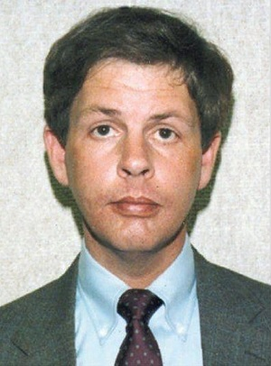
Jeremy Skibicki: The Winnipeg Serial Killer
Overview
In the spring of 2022, Jeremy Anthony Micheal Skibicki murdered four Indigenous women in Winnipeg, Manitoba, in a series of calculated and hate-fueled killings. He preyed on vulnerable women he met at homeless shelters, luring them to his apartment where he assaulted, killed, and desecrated their bodies before disposing of them like garbage. The discovery of the partial remains of his final victim, Rebecca Contois, in a public garbage bin led to his arrest and a shocking confession. Skibicki admitted to the four murders, claiming they were racially motivated and citing white supremacist beliefs. His trial centered not on whether he committed the acts, but on his state of mind. The defense argued he was not criminally responsible due to schizophrenia, while the prosecution maintained he was a calculating predator driven by racial hatred and homicidal necrophilia. On July 11, 2024, a judge found him guilty of four counts of first-degree murder, handing him an automatic life sentence. The case cast a harsh spotlight on the ongoing crisis of Missing and Murdered Indigenous Women and Girls (MMIWG) in Canada and sparked a national conversation about justice, systemic racism, and the search for victims' remains in landfills.
Early Life and Background
Jeremy Skibicki was born in Winnipeg in 1986 and was adopted by a Polish family. His childhood and adolescence were marked by increasingly erratic and violent behavior. Medical and social work records dating back to when he was 13 show a pattern of verbal and physical outbursts, aggression towards his mother, self-harm, property damage, and substance abuse. On one occasion, he sleepwalked into a female cousin's room and put his hands around her throat.
As a young adult, Skibicki's violent tendencies escalated, particularly towards his romantic partners, both of whom were Indigenous women. He had a documented history of domestic abuse. In 2015, he was convicted of assaulting his pregnant common-law partner, holding a knife to her stomach and threatening their unborn child. He received two years' probation.
In 2019, his then-wife obtained a three-year restraining order against him after a year of escalating abuse, during which he controlled her movements, monitored her phone, and subjected her to physical and sexual violence. She alleged he had fantasies of raping and choking her to death and would force her to take sleep medication so he could sexually assault her while she was unconscious. Despite charges in 2021 for violating the order, assault with a weapon, and uttering threats, he was acquitted.
Skibicki's social media presence in the years before the murders revealed a disturbing ideology of misogyny, antisemitism, and white supremacy. By his mid-twenties, he had experienced homelessness himself, at times staying in the same shelters he would later frequent to find his victims.
The Murders
Between March and May 2022, Skibicki targeted and killed four women. His method was consistent: he would meet vulnerable, unhoused Indigenous women, bring them to his North Kildonan apartment, assault them, and then kill them by strangulation or drowning in his bathtub. Following their deaths, he committed repeated acts of necrophilia before dismembering at least two of the women and disposing of all their remains in nearby garbage bins.
The first murder occurred on or around March 15, 2022. The victim was Ashlee Christine Shingoose, a 30-year-old woman from St. Theresa Point Anisininew Nation. Skibicki met her outside the Salvation Army shelter.
On or around May 1, 2022, Skibicki killed his second victim, 39-year-old Morgan Beatrice Harris, a member of Long Plain First Nation. He met her at a shelter the day before he murdered her.
Just days later, on or around May 4, 2022, he murdered 26-year-old Marcedes Myran, who was also a member of Long Plain First Nation.
His final victim was 24-year-old Rebecca Stacey Contois, a member of O-Chi-Chak-Ko-Sipi First Nation. Skibicki killed her on May 14 or 15, 2022. During a sexual encounter, she told him to get off her, at which point he choked her, smothered her with a pillow, and later dismembered her body in his bathtub. It was the disposal of her remains that would lead to his downfall.
The Victims
The four women Jeremy Skibicki murdered were daughters, mothers, and grandmothers. They were loved members of their families and First Nations communities who were struggling with homelessness and addiction when they were targeted.
- Ashlee Christine Shingoose, 30 — killed around March 15, 2022. For years, she was known to the public only by the spirit name Mashkode Bizhiki'ikwe, or Buffalo Woman, given to her by Indigenous community members so she would not be forgotten. From St. Theresa Point Anisininew Nation, her identity was confirmed by police in March 2025 through DNA analysis.
- Morgan Beatrice Harris, 39 — killed around May 1, 2022. A mother of five and a grandmother of one from Long Plain First Nation, her family remembered her as happy-go-lucky, fierce, and funny. Her daughters became powerful advocates for justice and for the search for her remains.
- Marcedes Myran, 26 — killed around May 4, 2022. A mother of two from Long Plain First Nation, her family described her as a sweet, kind, and trusting woman who was determined to overcome her struggles with addiction to regain custody of her children.
- Rebecca Stacey Contois, 24 — killed around May 15, 2022. A member of O-Chi-Chak-Ko-Sipi First Nation, she grew up in Winnipeg and was a mother to one daughter. Her family remembered her as a caring woman with a soft-spoken kindness who loved to laugh, draw, and bake.
Investigation and Capture
The investigation began on May 16, 2022, when a man scavenging for scrap metal discovered the partial remains of Rebecca Contois in a garbage bin in the back lane of Skibicki's apartment building. Police described it as a "horrifically grisly scene." The discovery led investigators to Jeremy Skibicki, who was arrested on May 17.
During a lengthy police interrogation that spanned roughly 20 hours, Skibicki initially denied involvement. Then, after asking to speak with a priest to "confess his sins," he made a stunning admission: "I killed four people." He proceeded to confess in detail to the murders of Contois, Morgan Harris, Marcedes Myran, and a fourth woman he could not name. He told detectives the killings were racially motivated and that he was a white supremacist.
Police found extensive physical evidence in Skibicki's apartment, including the DNA of Contois, Harris, and Myran. Bloodstains belonging to Contois were found throughout his bathroom, with the bathtub being particularly fluorescent under a black light, indicating a thorough cleaning attempt. Police also recovered victims' jewelry and clothing.
Based on his confession, Skibicki was initially charged with first-degree murder for the death of Rebecca Contois on May 18, 2022. On December 1, 2022, police announced three additional first-degree murder charges for the deaths of Harris, Myran, and the then-unidentified woman who would come to be known as Mashkode Bizhiki'ikwe.
Trial and Sentence
Jeremy Skibicki's trial began in April 2024. His lawyers admitted he carried out the killings but argued he should be found not criminally responsible (NCR) by reason of a mental disorder. The trial was heard by a judge alone.
The defense's case rested on the testimony of Dr. Sohom Das, a forensic psychiatrist from the United Kingdom, who argued that Skibicki suffered from schizophrenia. Das testified that Skibicki was motivated by psychotic delusions, including the belief that he was on a "mission from God" to kill his victims to get them into heaven. Skibicki told the psychiatrist that the acts of necrophilia were meant to "sanctify the body."
The Crown prosecutors forcefully rejected this claim. They argued the murders were the culmination of Skibicki's long-held and escalating patterns of racial hatred and sexual violence. Their expert witness, forensic psychiatrist Dr. Gary Chaimowitz, testified that Skibicki was not driven by psychosis but by a paraphilia, specifically homicidal necrophilia. Chaimowitz pointed to Skibicki's history of interest in necrophilia dating back to his teens and his sexual assaults on his ex-wife while she was unconscious as evidence of this escalating paraphilia. The prosecution presented Skibicki's confession, in which he cited racial hatred, and evidence of his white supremacist views as the primary motives. They portrayed him as a calculating killer who preyed on vulnerable women and took steps to cover up his crimes.
On July 11, 2024, Court of King's Bench Chief Justice Glenn Joyal delivered his verdict. He rejected the NCR defense entirely, siding with the Crown's expert and finding Skibicki guilty on all four counts of first-degree murder. Justice Joyal stated that Skibicki knew his "shocking" killings were morally wrong and was not affected by a mental disorder that would absolve him of responsibility. The courtroom, packed with victims' family members, erupted in cheers.
On August 28, 2024, Skibicki was sentenced to the mandatory term for first-degree murder: four concurrent life sentences with no possibility of parole for 25 years. During the sentencing hearing, family members delivered powerful and heart-wrenching victim impact statements. When asked if he had anything to say, Skibicki replied, "Nope." Justice Joyal noted that due to a 2022 Supreme Court decision striking down consecutive parole ineligibility periods, the sentence did not adequately reflect the gravity of the offenses or Skibicki's "moral culpability."
The Search for the Missing
A painful and defining aspect of the case has been the struggle to recover the victims' remains. While some of Rebecca Contois's remains were found in a garbage bin, more were located at the city-run Brady Road landfill. Skibicki's confession led police to believe the remains of Morgan Harris and Marcedes Myran were disposed of in a different, privately-owned facility, the Prairie Green landfill.
Initially, Winnipeg police stated they would not search the Prairie Green landfill, citing the passage of time, the volume of material deposited, and the danger to searchers. This decision sparked outrage and sustained protests from the victims' families, Indigenous leaders, and community members, who established encampments and blockades to demand a search. The slogan "Search the Landfill" became a national rallying cry.
The pressure led to feasibility studies and, eventually, a commitment from the federal and provincial governments to fund a search. In March 2025, after years of advocacy, the remains of Morgan Harris and Marcedes Myran were recovered from the Prairie Green landfill. Police also believe the remains of Ashlee Shingoose were taken to the Brady Road landfill in March 2022.
Aftermath and Legacy
The Jeremy Skibicki case is a grim chapter in Canadian history, highlighting the systemic failures that contribute to the crisis of Missing and Murdered Indigenous Women and Girls. His ability to escalate from documented domestic violence to serial murder raised painful questions about the justice system's response to violence against Indigenous women.
The murders prompted an emergency debate in the House of Commons and led to the unanimous adoption of a motion to create a "Red Dress Alert" system, akin to an Amber Alert, for missing Indigenous women and girls. The families of the victims, particularly the daughters of Morgan Harris, became prominent and powerful advocates, their grief fueling a national movement for justice and accountability. Their fight to have the landfills searched forced a reckoning on the value placed on Indigenous lives and the lengths to which society must go to bring victims home. The case stands as a tragic symbol of racially motivated and misogynistic violence, and a testament to the resilience of families who refused to let their loved ones be forgotten.