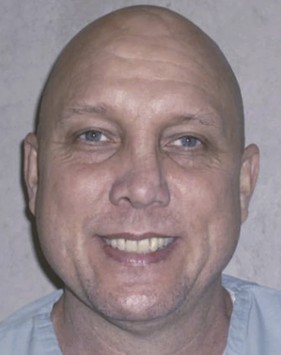
Angelo Buono Jr.: The Hillside Strangler
Overview
Between October 1977 and February 1978, a wave of terror gripped Los Angeles as the bodies of young women and girls began appearing on the city's hillsides. The media dubbed the perpetrator the "Hillside Strangler." It was later discovered that the strangler was not one man, but two: cousins Angelo Buono Jr. and Kenneth Bianchi. Posing as police officers, they lured, kidnapped, raped, tortured, and murdered ten victims ranging in age from 12 to 28. Their four-month reign of terror ended when Bianchi moved to Washington state, but his subsequent crimes there would ultimately unravel their deadly partnership. Bianchi's confession and testimony against his cousin led to Buono's arrest and conviction for nine of the murders. The case became one of the longest and most expensive criminal trials in U.S. history, cementing the cousins' notoriety in the annals of American crime.
Early Life and Background
Angelo Anthony Buono Jr. was born on October 5, 1934, in Rochester, New York, to Sicilian immigrant parents. When he was five, his parents divorced, and he moved to Glendale, California, with his mother. From a young age, Buono exhibited a deep-seated hostility toward women, blaming his mother for the divorce and calling her demeaning names. As a teenager, he idolized the notorious rapist Caryl Chessman and boasted to friends about sexually assaulting girls.
Buono dropped out of school at 16 and quickly amassed a criminal record for offenses like larceny and car theft, which led to a stint in a reformatory school. Throughout his adult life, he married four times and fathered eight children, though his relationships were marked by abuse. He ran an auto upholstery shop in Glendale, which would later become the primary location for his horrific crimes. By the time his younger cousin, Kenneth Bianchi, moved to Los Angeles in 1976, Buono had a long history of petty crime and sexual violence. Bianchi, who was impressed by Buono's seemingly hedonistic lifestyle, was soon drawn into his cousin's dark world, and the two began a criminal partnership, first as pimps and then as murderers.
The Murders
The killing spree began on October 17, 1977, with the murder of 19-year-old Yolanda Washington. Buono and Bianchi, using fake police badges to gain trust, would persuade women into their car, which they claimed was an unmarked police vehicle. They would then drive their victims to Buono's upholstery shop. There, the women were bound, raped, tortured, and finally strangled with a ligature. Afterward, the cousins would meticulously clean the bodies to remove evidence before dumping them on hillsides around Los Angeles.
Their second victim was 15-year-old runaway Judith Miller on October 31. The pace of the killings escalated dramatically in November 1977, a month in which they claimed six lives. The victims were 21-year-old Lissa Kastin, a waitress and dancer; 12-year-old Dolores Cepeda and 14-year-old Sonja Johnson, two friends abducted after a shopping trip; 20-year-old college student Kristina Weckler; 28-year-old aspiring actress Jane King; and 18-year-old college student Lauren Wagner.
The murder of women who were not involved in sex work, like Kastin and the younger girls, amplified public fear and media attention, leading to the "Hillside Strangler" moniker and the formation of a large police task force. In December, they murdered 17-year-old Kimberly Martin. Their tenth and final victim was 20-year-old Cindy Lee Hudspeth on February 16, 1978. Hudspeth had gone to Buono's shop to inquire about getting her car seats redone; the cousins decided on the spot that she would be their next victim. Her body was found in the trunk of her car, which had been pushed down a cliff.
The Victims
The ten women and girls murdered by Angelo Buono Jr. and Kenneth Bianchi came from various walks of life, their only connection being the tragic manner of their deaths.
- Yolanda Washington, 19 — October 17, 1977, Los Angeles. A part-time waitress and sex worker, she was the first victim, her body found on a hillside near the Ventura Freeway.
- Judith Lynn Miller, 15 — October 31, 1977, Los Angeles. A runaway who had recently left home, she was last seen on Sunset Boulevard before her body was discovered.
- Elissa Teresa "Lissa" Kastin, 21 — November 5, 1977, Glendale. A waitress and professional dancer, she was abducted after the cousins followed her home from work.
- Dolores Ann "Dolly" Cepeda, 12 — November 13, 1977, Los Angeles. She and her friend Sonja were abducted after getting off a bus and were found a week later near Dodger Stadium.
- Sonja Marie Johnson, 14 — November 13, 1977, Los Angeles. A friend of Dolores Cepeda, she was taken and murdered alongside her after a trip to the Eagle Rock Plaza.
- Kristina Weckler, 20 — November 20, 1977, Los Angeles. A college student, her body was discovered on a hillside between Glendale and Eagle Rock.
- Evelyn Jane King, 28 — November 23, 1977, Los Angeles. An aspiring actress, she was abducted after attending an actor's workshop and her body was found near a freeway off-ramp.
- Lauren Rae Wagner, 18 — November 28, 1977, Los Angeles. A business college student, her abduction near her parents' home was witnessed by a neighbor.
- Kimberly Diane Martin, 17 — December 14, 1977, Los Angeles. Her body was discovered in a deserted lot near Los Angeles City Hall.
- Cindy Lee Hudspeth, 20 — February 16, 1978, Los Angeles. A student and waitress, she was murdered after visiting Buono's shop; her body was found in the trunk of her car.
Investigation and Capture
The series of murders prompted the creation of a massive police task force, comprising officers from the LAPD, the Sheriff's Department, and the Glendale Police Department. Despite an intensive investigation involving hundreds of leads, the case remained unsolved for months, causing widespread panic among women in Los Angeles.
The break in the case came from another state. In May 1978, after a falling out with Buono, Kenneth Bianchi moved to Bellingham, Washington. In January 1979, he murdered two female college students, Karen Mandic and Diane Wilder. The similarities between the Washington murders and the Hillside Strangler cases quickly made Bianchi a suspect. During the investigation of his home, police found jewelry belonging to some of the Los Angeles victims.
Faced with overwhelming evidence, Bianchi confessed. In an attempt to avoid the death penalty, he implicated Angelo Buono as his partner in the California killings and agreed to testify against him. Buono was arrested at his Glendale upholstery shop on October 22, 1979.
Trial and Sentence
Angelo Buono Jr.'s trial began in the spring of 1982 and became one of the longest and most expensive in American history, lasting over two years. The prosecution's case relied heavily on the testimony of Kenneth Bianchi, who proved to be an unreliable and contradictory witness. At one point, Bianchi recanted his testimony, leading the judge to nearly dismiss the case against Buono before the California Attorney General's office took over the prosecution.
The trial featured testimony from nearly 400 witnesses and included over 1,800 exhibits. The prosecution presented forensic evidence, such as fibers found on the victims that linked back to Buono's shop, and the testimony of a neighbor who witnessed the abduction of Lauren Wagner. The defense called character witnesses, including Buono's sister, who described him as non-violent.
Between October and November 1983, the jury returned its verdicts. Buono was found guilty of nine of the ten murders; he was acquitted of the murder of Yolanda Washington. The jury convicted him on nine counts of first-degree murder with special circumstances. Despite the brutality of the crimes, the jury recommended life in prison without the possibility of parole, sparing him the death penalty. The judge, while expressing his wish that he could sentence both men to death, upheld the jury's recommendation.
Imprisonment and Death
Angelo Buono Jr. was sentenced to life imprisonment without the possibility of parole. He was initially sent to Folsom State Prison but was later transferred. In 1986, while incarcerated, he married for a fourth time. He spent the remainder of his life in prison, never expressing any remorse for his crimes.
On September 21, 2002, Buono was found dead in his cell at Calipatria State Prison. He was 67 years old. The cause of death was determined to be a heart attack; he had a history of heart problems. His body was cremated. His accomplice, Kenneth Bianchi, continues to serve a life sentence in Washington State Penitentiary.
Aftermath and Legacy
The Hillside Strangler case left an indelible mark on Los Angeles, instilling a deep sense of fear that lingered long after the killers were caught. The murders highlighted the vulnerability of young women and the chilling reality that predators could be two seemingly ordinary men. The investigation and subsequent trial were monumental undertakings that tested the limits of the justice system. The case remains a prominent example of familial crime partnerships and is frequently studied in criminology and forensic psychology. The names of the ten young victims are remembered as a tragic testament to the brutal crimes of Angelo Buono Jr. and Kenneth Bianchi.