Vender Duncan: The San Francisco "Phantom" Killer
Overview
Between 1955 and 1957, a series of brutal home invasion murders targeting elderly women plunged San Francisco into a state of fear. The attacker, a house painter named Vender Lee Duncan, used his trade as a cover to prey on the vulnerable, leaving a trail of terror that culminated in three confirmed deaths. His crimes were marked by extreme violence, sexual assault, and burglary. Duncan’s spree was brought to an end not by a single piece of evidence, but by his own guilt-ridden confession while serving time for another offense. His subsequent trial and execution closed a dark chapter in the city's history, but the memory of his victims serves as a somber reminder of the lives he destroyed.
Early Life and a Prelude to Violence
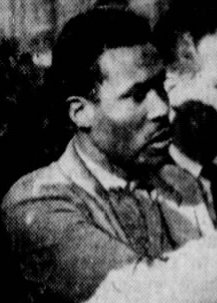
Vender Lee Duncan was born on February 18, 1928, in the small, unincorporated town of Sinclair City, Texas. His youth was reportedly troubled and marked by aggression. In a fight at the age of 17, he lost an eye, a physical characteristic that would later be noted in descriptions of him. His propensity for violence escalated dramatically when he was convicted of assault with intent to commit murder after stabbing a man 24 times.
After serving a prison sentence for this vicious attack, Duncan eventually made his way to San Francisco, California, with his common-law wife, Helen Green. There, he found work as a house painter. However, the income from his legitimate work was not enough to satisfy him, and he soon turned to burglary. His initial targets were houses where he could gain easy entry, but his crimes quickly escalated from theft to include sexual assault and murder, with a specific focus on elderly, defenseless women living alone.
The First Murder: Marceline Herdlick
On the night of January 9, 1955, Vender Duncan was prowling California Street when he spotted a second-floor apartment. He scaled the fire escape and peered through the window, where he saw 82-year-old Marceline Herdlick, a tailor, counting money. Seeing an opportunity, Duncan forced his way inside through the window.
The sight of the intruder terrified the elderly woman. Fearing her screams would attract attention, Duncan brutally attacked her, striking her in the face and causing her to collapse. He then choked the life out of her. After she was dead, he sexually assaulted her body before ransacking the apartment for anything of value. When Ms. Herdlick's landlady was unable to get a response the next day, police were called and discovered the horrific scene. An autopsy confirmed she had been strangled and violated post-mortem. Despite a thorough investigation of known sex offenders in the area, the case went cold.
The Second Murder: Elizabeth Manning
Nearly eight months later, on September 4, 1955, Duncan struck again. He was on Webster Street when he selected a first-floor apartment to burglarize. He climbed a fire escape and slipped through an unlocked window, where he encountered 75-year-old Elizabeth Manning, a retired nurse who suffered from a physical ailment.
As with his first victim, Duncan showed no mercy. He viciously beat the frail woman, who quickly succumbed to her injuries. An autopsy would later determine the cause of death was strangulation, though she had also been severely beaten about the head, face, neck, and chest, suffering numerous broken bones and internal injuries. Evidence of sexual assault was also present. After killing Ms. Manning, Duncan searched her apartment, stealing about $65 in cash. Before leaving the way he came, he pulled down the window shades to hide his crime. The next day, concerned neighbors and her reverend discovered her body. Police immediately suspected a link to the murder of Marceline Herdlick, but the "Phantom" killer, as he was sometimes called, remained at large.
The Final Attack: Ada Romig
For a year and a half, the city remained on edge, with no new leads in the brutal slayings. Then, on April 5, 1957, Duncan committed his most audacious and ultimately final murder. He came across 68-year-old Ada Romig in the Grove Street area. He attacked her in a vacant lot, beating her with unimaginable savagery and smashing a brick in her face.
He then dragged her semi-conscious body through the lot to nearby Fulton Street, hurled her over a brick wall, and continued dragging her until he found another vacant lot, where he left her for dead after sexually assaulting her. A passerby discovered Ms. Romig, barely alive, and she was rushed to the hospital. Despite her horrific injuries, which included a fractured skull, she was able to give a partial description of her attacker before she died from her injuries over a month later, on May 9, 1957.
The Victims
The women Vender Duncan murdered were targeted for their vulnerability, but they were individuals whose lives were tragically cut short.
- Marceline Herdlick, 82 — A tailor living on California Street, she was attacked and killed in her own home on January 9, 1955. She was a woman living independently in her later years when her life was violently taken.
- Elizabeth Manning, 75 — A retired nurse, she was murdered in her Webster Street apartment on September 4, 1955. Her life of caring for others ended in a brutal act of violence.
- Ada Romig, 68 — A pensioner, she was savagely attacked in a vacant lot on April 5, 1957, and died from her injuries on May 9, 1957. She bravely clung to life for over a month and was able to provide a partial description of her killer.
Investigation and Capture
Just three days after the fatal assault on Ada Romig, Duncan attacked another elderly woman. He forced his way into the apartment of 73-year-old Agnes Provost, beat her, and dragged her to the bathroom with the intent to rape her. However, Ms. Provost had the presence of mind to tell him there was a police station nearby, which scared him off. Though dazed and injured, she made her way to the station and gave a detailed description of her attacker.
Not long after, Duncan was arrested while attempting to commit a burglary. For this crime, he was convicted and sentenced to a year in county jail. It was during this period of incarceration, in November 1957, that his conscience apparently began to weigh on him. He asked to speak with homicide detectives and confessed to the murder of Elizabeth Manning, initially claiming she was a woman with whom he was having an affair. He led officers to her apartment building and provided details only the killer could know, such as how he used a garbage pail to climb up to her window.
Days later, he confessed to the murder of Ada Romig as well, and eventually admitted to the killing of Marceline Herdlick. He told police that he was usually drunk when he committed the crimes, which made him aggressive, and that he killed the women because he "couldn't stand it when they started to scream." His common-law wife corroborated part of his story, telling police he had come home with bloody clothes on the night of the Romig attack. Duncan concluded his confession by stating he wanted to plead guilty and preferred execution to life in prison.
Trial and Sentence
Vender Duncan's trial began on April 15, 1958. Prosecutors chose to try him for the two 1955 murders of Marceline Herdlick and Elizabeth Manning. Contradicting his earlier statements about wanting to plead guilty, Duncan entered a dual plea of not guilty and not guilty by reason of insanity. At trial, he recanted his confessions, claiming he had fabricated them because he wanted to die. He asserted that he had learned the details of the crimes from newspapers and police reports he had seen during a previous arrest.
The jury was not convinced. After an 11-day trial, they found him guilty on all charges, including two counts of first-degree murder. In a separate proceeding to determine his punishment, the jury sentenced him to death. A subsequent hearing determined that he was sane at the time he committed the murders.
Over the next year, Duncan's lawyers filed appeals to the Supreme Court of California and petitioned Governor Pat Brown for clemency, but all were denied. On May 25, 1959, the Supreme Court of the United States refused to hear his final appeal. Vender Lee Duncan was executed in the gas chamber at San Quentin State Prison on May 29, 1959. He was 31 years old.
Aftermath and Legacy
Vender Duncan's crimes sent a wave of terror through San Francisco, particularly among its elderly residents. His case highlighted the vulnerability of a population often overlooked and living in quiet solitude. The brutality of the murders, combined with the sexual-sadistic nature of the attacks, left a deep scar on the community. Duncan fits the profile of a disorganized killer who acted on impulse, often while intoxicated, and whose primary motive appeared to be a combination of burglary and the violent fulfillment of his cruelest urges. His capture and execution brought a sense of justice, but the memory of his brief, vicious reign of terror serves as a chilling example of predatory violence.