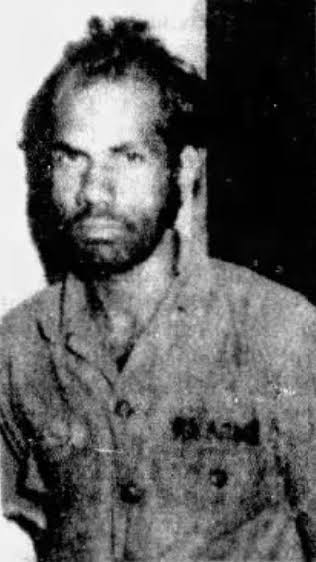
Heriberto Seda: The New York Zodiac Killer
Overview
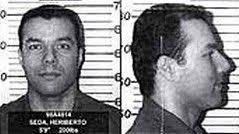
For three and a half years, New York City was haunted by a phantom killer who styled himself after California's infamous, and still unidentified, Zodiac Killer. Between March 1990 and October 1993, this copycat shot or stabbed eight people, killing three. He sent taunting letters to the police and newspapers, boasting of his crimes and his intention to kill one victim for each of the twelve astrological signs. The attacker used crude, homemade zip guns, which he claimed would make the bullets untraceable. The city was on edge, but the attacks abruptly stopped in late 1993. The case went cold until June 1996, when a violent domestic dispute in an East New York, Brooklyn, apartment led to an astonishing breakthrough. The man at the center of it, Heriberto "Eddie" Seda, a 28-year-old unemployed recluse, was unmasked as the New York Zodiac Killer.
Early Life and Background
Heriberto Seda was born on July 31, 1967, in New York City. Raised in a religious household by his mother, he grew up in East New York, a neighborhood troubled by crime. Seda was a loner who kept to himself and had few friends. He was a good student but was expelled from high school at age 16 for bringing a weapon, a starting pistol, to school. Rather than attend mandatory counseling to be readmitted, he dropped out.
As a young adult, Seda was unemployed and lived with his mother and younger half-sister, Gladys "Chachi" Reyes. He developed an obsession with firearms, astrology, and death. He read books about serial killers, idolizing Ted Bundy and, most of all, the San Francisco Zodiac Killer, whom he admired for never being caught. Seda was deeply religious, attended church regularly, and eschewed drugs and alcohol, yet he was also controlling and abusive toward his sister. He made money by stuffing plastic bags into the coin return slots of payphones and vending machines, returning later to collect the trapped change. His dream of joining the military was dashed when he failed the entrance exam. Inspired by a television documentary on the original Zodiac, he decided to embark on his own reign of terror.
The Murders and Attacks
The attacks began on March 8, 1990. Mario Orozco, 49, a Scorpio, was shot in the back in Brooklyn. He survived. The gunman left a note wrapped around the zip gun claiming the attack for "the Zodiac." Three weeks later, on March 29, German Montenegro, 34, a Gemini, was shot and wounded in the torso.
The first fatality occurred on May 31, 1990. Joseph Proce, a 78-year-old Taurus, was shot in the back near his Queens home. A note was found nearby with a diagram of the zodiac signs of the first three victims and the message, "Zodiac -- Time to die!" Proce lingered in the hospital before dying from his injuries on June 24. The final attack of 1990 came on June 19, when Larry Parham, 30, a homeless man and a Cancer, was shot in the chest as he slept on a bench in Central Park. Parham survived and later told police a stranger had asked for his birthday a few days prior. A note found near this scene contained a fingerprint that would later prove crucial.
After this series of attacks, the New York Zodiac went silent for over two years. The crime spree resumed with shocking brutality on August 10, 1992. Patricia Fonti, a 39-year-old Leo, was shot with a .22 caliber zip gun near the Highland Park reservoir in Queens. When she fought back, her attacker panicked and stabbed her more than 100 times, killing her.
The attacks continued into 1993. On June 4, Jim Weber, a 40-year-old Libra, was shot in the buttocks and wounded in Highland Park. On July 20, in the same park, Joseph Diacone, 40, a homeless man and a Virgo, was shot and killed at point-blank range. The final known attack occurred on October 2, 1993. Diane Ballard, 40, a Taurus, was shot in the neck as she sat on a bench, also in Highland Park. She survived but was left partially paralyzed. After this, the Zodiac once again vanished.
The Victims
Seda's victims were chosen at random, their only connection being the killer's twisted astrological criteria.
- Mario Orozco, 49 — Survived a shooting on March 8, 1990. He was the first victim, shot in the back in Brooklyn.
- German Montenegro, 34 — Survived a shooting on March 29, 1990. He was shot through the liver.
- Joseph Proce, 78 — Shot on May 31, 1990, and died on June 24, 1990. An elderly man attacked near his home in Queens.
- Larry Parham, 30 — Survived a shooting on June 19, 1990. A homeless man shot while sleeping in Central Park.
- Patricia Fonti, 39 — Killed on August 10, 1992. She was shot and then stabbed over 100 times when she resisted her attacker.
- Jim Weber, 40 — Survived a shooting on June 4, 1993. He was an unemployed construction worker shot near Highland Park.
- Joseph Diacone, 40 — Killed on July 20, 1993. A homeless man shot at close range in Highland Park.
- Diane Ballard, 40 — Survived a shooting on October 2, 1993. She was shot in the neck and left partially paralyzed.
Investigation and Capture
The NYPD initially struggled to connect the disparate shootings. It was the killer's own letters to the *New York Post* and police that linked the crimes. In these taunting communications, he adopted the name and cross-circle symbol of the California Zodiac, provided details only the killer would know, and laid out his astrological mission. A massive task force, dubbed "Operation Watchdog," was formed, involving dozens of detectives. Police consulted astronomers, and handwriting experts confirmed the New York killer was not the original Zodiac. The investigation was hampered by the homemade guns, which left no rifling marks on the bullets, and the random nature of the attacks.
In March 1994, Seda had a close call with the law. Police stopped him and found him carrying one of his zip guns. However, the weapon was incorrectly labeled at the evidence lab and deemed non-functional, and the charges were dropped. Seda took this as a sign that he was invincible.
The break in the case came unexpectedly on June 18, 1996. Seda became enraged when his 17-year-old half-sister, Gladys Reyes, had her boyfriend over to their apartment. During the ensuing argument, Seda grabbed a zip gun and shot his sister in the back as she tried to flee. She escaped to a neighbor's apartment and called 911. Seda then barricaded himself inside, exchanging gunfire with police for over three hours before surrendering.
At the police station, Detective Joseph Herbert was tasked with taking Seda's handwritten confession about the domestic assault. As Seda finished writing, he drew a symbol at the bottom of the page: a circle with a cross through it. Herbert, who had worked on the Zodiac task force, immediately recognized the sign. This single act connected the recluse from East New York to the city's most notorious unsolved serial killer case. Investigators quickly matched Seda's fingerprints to the print found on the note at the Larry Parham crime scene in 1990 and to a letter sent to the *New York Post* in 1994. DNA from saliva on a postage stamp from one of the letters also matched Seda. Faced with the evidence, he confessed to being the New York Zodiac Killer.
Trial and Sentence
Heriberto Seda faced two separate trials in 1998. The first, in Queens, covered the three murders and one of the attempted murders. Throughout the six-week trial, Seda was disruptive, shouting outbursts at the judge. The prosecution presented 45 witnesses and 150 pieces of evidence. On June 24, 1998, a jury found him guilty. He was sentenced to 83 and a half years in prison for these crimes.
A second trial in Brooklyn addressed the other attempted murders, including the shooting of his sister and firing at police officers during the 1996 standoff. This resulted in an additional sentence of 152 and a half years. His total sentence amounts to 232 years, ensuring he will spend the rest of his life in prison.
Aftermath and Legacy
Heriberto Seda's capture brought an end to a case that had baffled one of the world's largest police forces and terrified a city. His crimes were a chilling example of a copycat killer driven by a desire for the infamy achieved by his predecessor. While the original Zodiac Killer remains a mystery, his New York counterpart was brought to justice through a combination of a domestic dispute, an alert detective's memory, and the killer's own hubris in signing his confession with his murderous symbol.
Seda is incarcerated at the Clinton Correctional Facility in Dannemora, New York. In prison, he has reportedly spent his time reading the Bible and quoting scripture to other inmates. In a bizarre twist, Seda, who had been described as homophobic, began a relationship and later married a transgender woman, Synthia-China Blast, who was also serving a sentence for murder. He remains a dark figure in New York's criminal history, a recluse who transformed his obsessions into a deadly, if brief, public spectacle.