Peter Woodcock: The Killer They Couldn't Cure
Overview
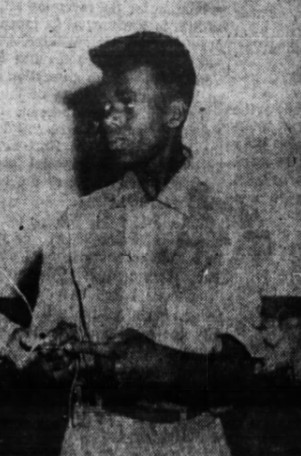
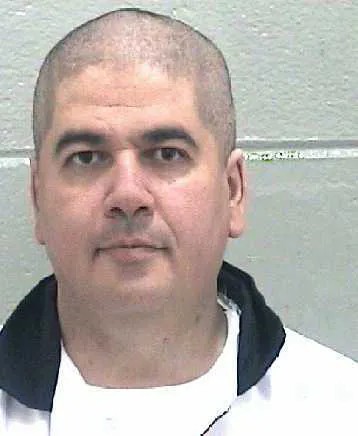
Peter Woodcock was a Canadian serial killer who murdered three children in Toronto over a five-month period in 1956 and 1957 when he was just 17 years old. Found not guilty by reason of insanity, he spent the next three decades in psychiatric institutions, where he legally changed his name to David Michael Krueger. In 1991, on his first unsupervised day pass in 34 years, he murdered a fellow patient. Diagnosed as a psychopath, Woodcock's case sparked debates about the treatment of mentally ill offenders and the potential for rehabilitation. He was never cured and died in custody in 2010 on his 71st birthday.
Early Life
Peter Woodcock was born on March 5, 1939, in Peterborough, Ontario, to a 17-year-old factory worker who gave him up for adoption. His first three years were turbulent, spent in various foster homes where he was reportedly physically abused in at least one, suffering a serious neck injury. This early trauma appeared to have a profound effect; he was described as a difficult child who would cry constantly and cower when approached.
At age three, he was taken in by a well-off Toronto family, the Maynards, who provided a stable home. Despite this, Woodcock remained an outcast. He was unable to socialize with peers, was often bullied, and would frequently wander Toronto alone on his bicycle. Social workers grew concerned about his violent fantasies. He was eventually sent to a school for emotionally disturbed children, where he began to exhibit manipulative behaviors and sexually exploit other students.
The Toronto Child Murders
In the fall of 1956, at the age of 17, Peter Woodcock began his killing spree. On September 15, he was riding his bicycle on the grounds of the Canadian National Exhibition when he encountered seven-year-old Wayne Mallette. He lured the boy to a secluded area, where he strangled and beat him to death.
The police investigation into Mallette's murder initially went astray. They arrested a 14-year-old boy, Ron Moffatt, who, after intense interrogation, gave a false confession. Moffatt was convicted and sent to a youth detention center, leaving Woodcock free to kill again.
Less than a month later, on October 6, 1956, Woodcock targeted nine-year-old Gary Morris. He met Morris in Toronto's Cabbagetown neighborhood and offered him a ride on his bike, taking him to an industrial area near Cherry Beach. There, he strangled, bludgeoned, and bit the boy, whose body was found with a ruptured liver from the savage beating.
The final murder in the series occurred on January 19, 1957. Four-year-old Carole Voyce was playing outside when Woodcock approached and offered her a ride on his handlebars. He took her to a ravine under the Prince Edward Viaduct, where he sexually molested and killed her. Her body was discovered the next day.
The Victims
- Wayne Mallette, 7 — September 15, 1956, Toronto, Ontario. Wayne was lured from the Canadian National Exhibition grounds and brutally murdered. His death led to the wrongful conviction of another teenager before his real killer was found.
- Gary Morris, 9 — October 6, 1956, Toronto, Ontario. The oldest of the child victims, Gary was convinced to go for a bicycle ride to Cherry Beach, where he was viciously attacked and killed.
- Carole Voyce, 4 — January 19, 1957, Toronto, Ontario. The youngest victim, Carole was a trusting little girl who accepted a ride on a stranger's bicycle and was taken to a ravine where her life was ended.
- Dennis Kerr, 27 — July 13, 1991, Brockville, Ontario. A fellow patient at the Brockville Psychiatric Hospital, Dennis was murdered by Woodcock on his first day of unsupervised release in over three decades.
Investigation and Capture
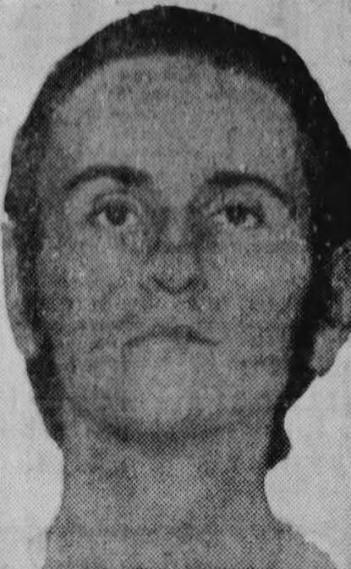
The murder of Carole Voyce finally broke the case. Several witnesses saw a teenager on a bicycle with the little girl and were able to provide a detailed description to the police. A composite sketch was created and published on the front page of the Toronto Star. This led directly to Woodcock's arrest on January 21, 1957.
Once in custody, Woodcock confessed to the murders of all three children. He showed little remorse, his primary concern reportedly being that his foster mother would find out. His confession was crucial in exonerating Ron Moffatt, the boy who had been wrongly convicted of Wayne Mallette's murder.
Trial and Incarceration
Woodcock was tried only for the murder of Carole Voyce. The trial began on April 8, 1957. Despite his detailed confession, his defense argued that he was not criminally responsible due to insanity, citing his traumatic childhood. After a four-day trial, on April 11, 1957, the jury found him not guilty by reason of insanity.
This verdict meant an indefinite committal to a psychiatric facility. Woodcock was sent to the Oak Ridge division of the maximum-security Penetanguishene Mental Health Centre. He would spend the next 34 years in psychiatric custody. During this time, he was subjected to experimental treatments for psychopathy, including LSD therapy, but they proved ineffective. He learned to manipulate the system and his therapists, later admitting the programs only made him better at deception. In 1982, he legally changed his name to David Michael Krueger.
The 1991 Murder
By 1989, Woodcock, now known as Krueger, was deemed to have made progress and was transferred to the less-restrictive Brockville Psychiatric Hospital. There, he was granted more freedoms, including supervised day trips.
On July 13, 1991, the 52-year-old Krueger was granted his first unsupervised day pass in 34 years. He was signed out by Bruce Hamill, a former Oak Ridge patient and convicted killer whom Krueger had befriended. Within an hour, Krueger and Hamill met with another patient, 27-year-old Dennis Kerr, in a wooded area on the hospital grounds. Kerr had previously rejected Krueger's sexual advances. Using a pipe wrench, hatchet, and knives that Hamill had purchased, they brutally murdered and mutilated Kerr. After the killing, Krueger walked to a police station and turned himself in.
Aftermath and Legacy
Following the murder of Dennis Kerr, Krueger was returned to the maximum-security facility at Penetanguishene, where he would remain for the rest of his life. He was never tried for Kerr's murder, but was again found not guilty by reason of insanity. His accomplice, Bruce Hamill, was also returned to Oak Ridge.
The case of Peter Woodcock, or David Michael Krueger, left a lasting mark on the Canadian justice and mental health systems. He became known as "the serial killer they couldn't cure," a chilling example of the limitations of psychiatric treatment for severe psychopathy. His ability to manipulate therapists and gain freedom, only to kill again, raised serious questions about risk assessment and the release of violent offenders. In interviews, he remained cold and articulate about his crimes, once describing the murders of the children as an effort "to correct a balance."
Peter Woodcock died of natural causes in custody on March 5, 2010, his 71st birthday.