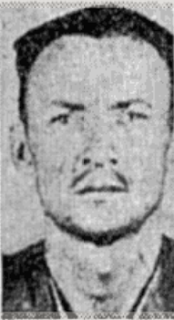
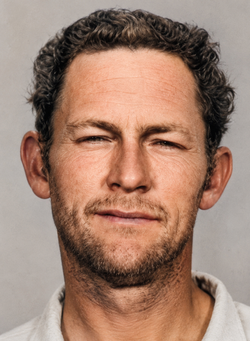
Donald Dale “Red” Smith, a 60-year-old man, was one of the 25 victims murdered by farm-labor contractor Juan Vallejo Corona in Sutter County, California, during the spring of 1971. Although August 22, 1971, has been supplied as Smith's date of death, the California court record does not support that date. In the criminal case against Corona, Count V specifically charged him with murdering Donald Smith sometime between April 30 and May 11, 1971. Smith therefore appears to have been dead for weeks before the investigation uncovered the scope of the killings.
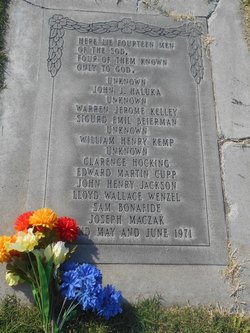
Smith's remains were among those discovered during an extraordinary search of orchards in the Marysville-Yuba City area along the Feather River. Between May 20 and June 4, investigators excavated a succession of shallow graves on the Kagehiro and Sullivan ranches. The victims were largely itinerant or migrant laborers, men who could be offered temporary agricultural work without immediately attracting attention when they disappeared. Corona worked as a labor contractor, recruiting and supervising seasonal workers, which gave him both access to potential victims and legitimate reasons to be present on the ranches where the graves were found.
Available accounts identify Smith's killing as involving stabbing and slashing with a knife or machete. That was consistent with the extraordinary similarity investigators found among the deaths. The appellate record states that all but one of the 25 victims suffered chopping or hacking injuries to the head. Many also had stab wounds to the upper left chest, sometimes penetrating the heart or lungs or severing major blood vessels. The bodies were generally buried in similar positions, often on their backs with clothing pulled over their heads. Because Smith's remains had been in the ground for an extended period, authorities could not establish an exact day of death, which explains why the murder charge used the April 30-May 11 time frame rather than a single date.
The investigation quickly focused on Juan Corona as additional graves were opened. Evidence found in and around the burial sites connected him directly to the orchards. Meat-market receipts bearing Corona's name and signature were discovered in one grave, while Bank of America deposit slips carrying his name and Yuba City address were recovered from another. Witnesses also placed Corona and vehicles associated with him near the burial areas. Investigators found tire impressions near one grave that were consistent with the type of tires on his van.
Corona was arrested on May 26, 1971. Searches of his home, vehicles and work area produced additional evidence, including knives bearing human blood, a bolo-style blade, a loaded 9-millimeter pistol, bloodstains in his vehicles, a shovel and a post-hole digger. Police also found a ledger containing names and dates, including the names of several men who became identified victims. Prosecutors argued that the records helped establish how Corona recruited vulnerable laborers and connected him to men who later disappeared. Donald Smith's name was ultimately incorporated into the prosecution as one of the 25 homicide counts.
A Sutter County grand jury indicted Corona on 25 murder counts in July 1971. After extensive pretrial proceedings and a change of venue, Corona went to trial and on January 18, 1973, a jury found him guilty of first-degree murder on all 25 counts, including the murder of Donald Smith. The conviction meant that Smith's death was not merely attributed to Corona by investigators; it was one of the murders for which a jury formally found Corona criminally responsible.
The case did not end with that verdict. On May 8, 1978, a California appellate court overturned Corona's convictions because of serious problems with the representation he had received at his first trial. The court concluded that his attorney had failed to adequately investigate potentially important defenses and had operated under a conflict of interest. The reversal did not declare Corona innocent or determine that the evidence connecting him to Smith and the other victims was false; instead, it required that he receive a new trial.
Corona was retried in Hayward in 1982. Unlike the first trial, the defense presented numerous witnesses, and Corona himself briefly testified, denying that he had participated in the killings. Nevertheless, after a seven-month trial, the jury again found him guilty of all 25 murders on September 23, 1982. He returned to prison to serve life sentences for the crimes. California correctional records subsequently listed him as serving 25 concurrent life sentences for 25 counts of first-degree murder. He was repeatedly denied parole and remained incarcerated until his death from natural causes on March 4, 2019.
For Donald Smith, the surviving record leaves many details of his personal life obscure, a circumstance shared by several of Corona's victims. What is firmly established is that Smith was murdered in Sutter County during the spring of 1971, buried in the same orchard region where the remains of Corona's other victims were concealed, and became the named victim in Count V of one of the largest serial-murder prosecutions in California history. The strongest court evidence places his death between April 30 and May 11, 1971, rather than August 22, and Juan Corona was ultimately convicted twice of Smith's murder.