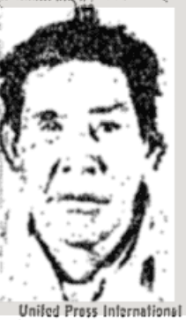
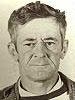
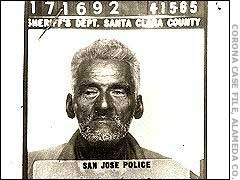
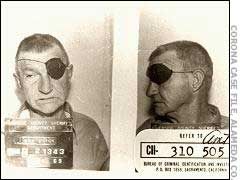
Elbert J. T. Riley, a man in his mid-40s, became one of the victims in the series of farm-laborer murders that terrified California's Sutter County in the spring of 1971. Although an August 22, 1971 death date has been associated with Riley in some records, the court record does not support that date. In the prosecution of Juan Vallejo Corona, Riley's killing was charged as having occurred on or about May 12, 1971.
That date also fits the testimony of Byron Shannon, a labor contractor who said he was speaking with Riley and two other men, Jonah Smallwood and Paul Allen, in lower Marysville when Corona arrived in a pickup truck and offered them work. The three men accepted the offer and left with Corona. Shannon testified that he never saw Riley, Smallwood, or Allen alive again.
Riley disappeared into a pattern that investigators would only begin to understand days later. On May 20, authorities unearthed the first body from a freshly disturbed grave in a Sutter County orchard. More graves followed, scattered through orchards and ranch property in the Marysville-Yuba City agricultural area. By early June, investigators had recovered the remains of 25 men. The court record described a grimly consistent method: almost all of the victims suffered hacking or chopping injuries to the head, and many also had stab wounds to the upper left chest capable of penetrating the heart, lungs, or major blood vessels. Their bodies were often placed in similar positions and buried in shallow graves. Riley was identified as one of those victims recovered during the investigation.
The evidence increasingly focused on Juan Corona, a local farm labor contractor whose work gave him access to migrant laborers and the orchards where the graves were discovered. Riley's last known movements became particularly important because Shannon had placed him in Corona's pickup on May 12. Investigators later found human hair embedded in dried mud on a post-hole digger kept in Corona's garage. A forensic examination concluded that the hair had been forcibly removed, and some of it was microscopically similar to hair taken from several of the murder victims, including Riley. Although hair comparison of that era could not identify a person with the certainty of modern DNA testing, prosecutors considered the finding another physical connection between Corona's property and the dead men.
Other evidence recovered during the investigation strengthened the case. Authorities found bloodstained knives and other weapons, clothing bearing human blood, a shovel, rubber boots, ammunition, and additional items in Corona's buildings and vehicles. Papers bearing Corona's name had also been found in or around graves, and prosecutors presented records suggesting that he had kept track of men associated with his labor operation. Taken together with witness testimony such as Shannon's account of Riley leaving with Corona, prosecutors argued that the graves were not random burial sites but the result of a systematic series of killings connected to Corona's work recruiting agricultural laborers. Corona was arrested on May 26, 1971, as investigators were still uncovering additional graves.
Riley's death became Count XVI in the enormous murder prosecution against Corona. Prosecutors ultimately charged Corona with killing 25 men, all connected in varying ways to the migrant and seasonal farm-labor community. After a lengthy trial involving more than 100 prosecution witnesses, a jury found Corona guilty of first-degree murder on all 25 counts in January 1973. The conviction appeared to settle responsibility for Riley's death and the other killings, but the case was not finished. In 1978, a California appellate court overturned the convictions after concluding that Corona had been denied adequate legal representation, including problems arising from his attorney's conflicts of interest. The ruling did not declare Corona innocent; it required that he be tried again.
At Corona's second trial in 1982, his defense attempted to shift suspicion toward his half-brother, Natividad Corona. The defense emphasized Natividad's violent past and argued that he, rather than Juan, could have committed the orchard murders. Natividad had previously been implicated in a machete attack and had left the United States years earlier. Prosecutors countered that the evidence, including Juan Corona's connection to the victims, the burial locations, physical evidence recovered from his property and vehicles, and testimony concerning men such as Riley, pointed to Juan. The second jury again convicted Corona of all 25 murders. He received 25 life sentences and remained imprisoned for the rest of his life.
The case remained one of the largest multiple-murder prosecutions in American history at the time. Corona repeatedly sought parole and was denied. Decades later, during a 2011 parole hearing, he made statements indicating that he had purchased a machete and begun killing the men one by one, an acknowledgment markedly different from the denials and alternative-suspect arguments that had surrounded his trials. Corona died in prison in 2019. For Elbert J. T. Riley, the strongest surviving court evidence therefore places his disappearance and killing around May 12, 1971—not August 22—and ties his final known journey directly to the man who was twice convicted of murdering him.