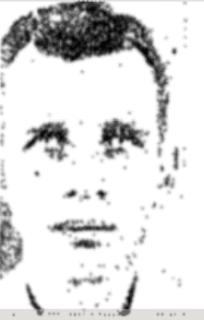
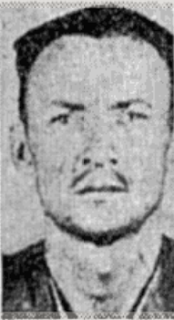
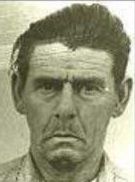
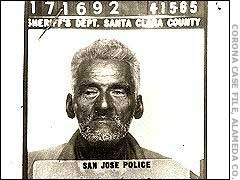
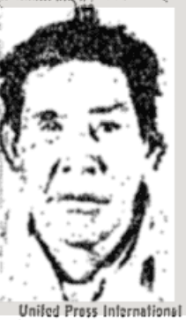
Albert Leon Hayes was a 58-year-old man whose death became part of one of the most notorious murder investigations in California history. Although August 22, 1971, has been provided as his date of death, contemporary court records do not support that date. The criminal case against Juan Vallejo Corona charged Corona with murdering Hayes sometime between February 27 and May 13, 1971. The exact day Hayes was killed could not be determined.
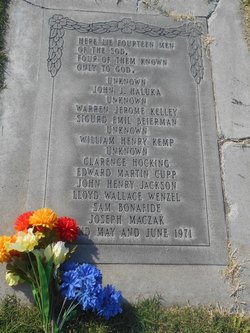
His remains were among the bodies unearthed during the massive search of orchards in the Marysville-Yuba City area of Sutter County, and accounts of the recovery identify Hayes as one of six victims whose bodies were found on May 27, 1971.
Hayes was one of a group of itinerant and seasonal farm laborers who disappeared in the agricultural country surrounding Yuba City during the spring of 1971. Corona worked as a farm-labor contractor, recruiting and supervising men for orchard work, which gave him regular contact with the type of transient workers who became the victims. Because many of the men moved frequently and had few permanent ties to the area, their disappearances did not immediately reveal that a serial murderer was operating among them.
The investigation began to unfold after peach grower Goro Kagehiro noticed a freshly dug, man-sized hole in his orchard on May 19. When he returned later that day, the hole had been filled. Sheriff's deputies excavated the location the following morning and discovered the body of Kenneth Whitacre. Additional disturbed areas were subsequently examined, and investigators began uncovering grave after grave on the Kagehiro and Sullivan ranch properties. Between May 20 and June 4, authorities ultimately recovered 25 murdered men.
The condition of the bodies revealed a remarkably consistent pattern. Court records stated that all but one of the 25 victims had suffered chopping or hacking injuries to the head. Some wounds appeared to have been inflicted with a lighter cutting instrument, while others were severe blows from a heavy weapon such as a bolo machete, powerful enough to cut through bone. Another recurring feature was a stab wound to the upper-left chest capable of penetrating the heart or lung or severing major blood vessels. The victims were also buried in strikingly similar positions, generally on their backs, often with their hands above or around their heads and their clothing pulled over their faces. Because of the similarities in the wounds and burial methods, investigators and prosecutors concluded that the killings were the work of the same perpetrator or perpetrators.
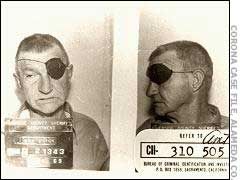
Evidence began pointing toward Juan Corona while the bodies were still being recovered. In one grave investigators found meat-market receipts bearing Corona's name and signature. Other evidence associated him with the orchards and burial locations, and witnesses placed him or his vehicles near areas where victims were later discovered. Several victims had also been offered employment by Corona or had been seen leaving with him before disappearing. Investigators ultimately concluded that Corona used his position as a labor contractor to gain access to vulnerable men and, in some cases, lure them away under the promise of work.
Authorities arrested Corona on May 26, 1971, while the search for additional bodies was continuing. Searches of property under his control produced an extraordinary collection of evidence. Investigators found knives bearing human blood, a handgun, bloodstained clothing, a shovel, rubber boots and a post-hole digger with human hairs embedded in dried mud. Corona's van contained blood in several locations and of different blood types. A bolo-style cutting weapon and ammunition were also recovered.
One of the most important discoveries was a ledger found in Corona's home. It contained a series of men's names accompanied by dates, including the names of several confirmed victims. Prosecutors considered the document highly incriminating and argued that it was far more than an ordinary employment record. Unlike normal payroll documentation, it did not contain Social Security numbers, wages, amounts paid or other routine employment information. Handwriting evidence tied the entries to Corona, and investigators also connected the different ink colors in the ledger to a multicolor pen associated with him.
Hayes became Count XIX of the prosecution's case. The charge specifically alleged that Corona murdered Albert Hayes sometime between February 27 and May 13, 1971. Because decomposition and the length of time several bodies had been buried made precise dating impossible, prosecutors could not establish Hayes's exact day of death. The California Court of Appeal later emphasized that, with the exception of the first-discovered victim, investigators generally could not determine the precise dates on which the 25 men died. Hayes therefore should not be described as having been conclusively killed on August 22; the official criminal proceedings placed his murder months earlier.
Corona eventually went to trial for all 25 killings. After a lengthy prosecution built largely around physical and circumstantial evidence, a jury found him guilty of 25 counts of first-degree murder on January 18, 1973. He received 25 life sentences. The convictions included the murder of Hayes, meaning his death was not merely attributed to Corona by investigators; it became one of the murders for which Corona was formally prosecuted and convicted.
The case did not end with the first verdict. In 1978, the California Court of Appeal overturned Corona's convictions after finding serious problems with the representation provided by his original attorney, including inadequate investigation of possible defenses and a conflict of interest involving literary and dramatic rights to Corona's story. The reversal did not declare Corona innocent. Instead, it required that he receive another trial.
At the 1982 retrial, prosecutors again presented the extensive evidence linking Corona to the murders. The defense attempted to shift suspicion toward Corona's half-brother, Natividad Corona, who had previously been associated with a violent machete attack and had since died in Mexico. Prosecutors countered that evidence did not place Natividad in the area often enough during the relevant period to account for the series of killings. Corona himself testified and maintained his innocence, but the jury again rejected the defense.
Corona was again convicted of all 25 murders, including the murder of Albert Hayes, and on September 23, 1982, he was sentenced to 25 consecutive life terms. He remained imprisoned for the rest of his life, repeatedly being denied parole before dying in prison in 2019. Thus, although the precise circumstances of Hayes's final hours and the exact date on which he was attacked remain unknown, the criminal case ultimately established Juan Vallejo Corona as the man legally responsible for his murder.