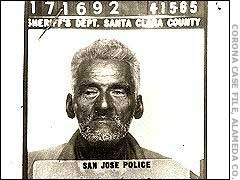
Paul Buel Allen, a 59-year-old male, was one of the 25 itinerant laborers murdered in the Sutter County, California, killing spree for which farm-labor contractor Juan Vallejo Corona was ultimately convicted. Available court records do not support August 22, 1971, as Allen's date of death. The California Court of Appeal described the killings as occurring between February and May 1971 and specifically identified Allen in count XVII of the prosecution, alleging that he was murdered sometime
between May 2 and May 13. Other records have associated Allen with May 15, apparently because that date appeared beside his name in a ledger later seized from Corona's home. Because investigators could not establish exact death dates for most of the victims, Allen's death is best placed in mid-May 1971 rather than August.
One of the strongest pieces of evidence concerning Allen's final known movements came from labor contractor Byron Shannon. On May 12, 1971, Shannon was in lower Marysville talking with Allen and two other men, Jona R. Smallwood and Elbert J. T. Riley. While they were together, Juan Corona drove up in a pickup truck and asked the three whether they wanted to work for him. Allen, Smallwood and Riley accepted the offer, climbed into Corona's truck and departed with him. Shannon never saw any of the three alive again. The encounter became especially important because Corona made similar employment offers to other men who subsequently disappeared and were found murdered.
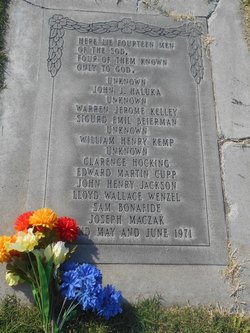
Allen disappeared during a period in which bodies were being secretly buried in orchards on the Kagehiro and Sullivan ranches in the Marysville-Yuba City area. The graves were not discovered until later in May, when a ranch owner noticed a freshly dug, grave-shaped hole that was subsequently filled in. The discovery of the first body led deputies into an expanding search that eventually uncovered the remains of 25 victims between May 20 and June 4. Allen was among the identified victims recovered during that investigation. The killings followed such a distinctive pattern that investigators and attorneys concluded the victims had been killed by the same person or persons. Nearly every victim had suffered chopping or hacking wounds to the head, some inflicted with enough force to cut through bone, while many also had deep stab wounds to the upper left chest capable of penetrating the heart or lungs and severing major blood vessels. The bodies were then concealed in shallow graves in similar positions, often with clothing pulled over the head.
Evidence recovered after the murders connected Corona specifically to Allen as well as to the larger series. During a search of Corona's home, investigators found a green ledger containing names and dates. Among its entries was “Paul B Allen” accompanied by the date May 15, 1971. Prosecutors rejected the defense contention that the book was simply a labor-business record, pointing out that it contained none of the ordinary information expected in payroll records, such as Social Security numbers or amounts paid. Even more significantly, investigators examined hairs embedded in dried mud on a post-hole digger found in Corona's garage. The hair was human, did not belong to Corona, and microscopic examination found similarities to the head hair of several victims, including Allen. One hair contained an actively growing follicle indicating that it had been forcibly pulled from someone's head.
The searches produced a much broader collection of evidence. Investigators found knives with human blood, a bolo knife, a pistol, bloodstained clothing, digging equipment and extensive human bloodstaining inside Corona's vehicles. Blood was detected on the walls, ceiling, bumper and other areas of a van associated with him. A shovel and bloodstained rubber boots were found in the vehicle as well. Other graves contained items directly traceable to Corona, including meat-market receipts bearing his signature and bank deposit slips printed with his name and address. Together with eyewitness testimony showing victims leaving with Corona, his access to the orchards, the ledger containing Allen's name and the physical evidence recovered from his property, prosecutors constructed a largely circumstantial but extensive case tying him to the killings.
Corona was arrested on May 26, 1971, as the search for additional victims continued. Prosecutors ultimately charged him with 25 counts of first-degree murder, with Allen's killing constituting count XVII. After a lengthy trial, a jury found Corona guilty of all 25 murders in January 1973, and he was sent to state prison the following month. The conviction did not end the case. In 1978, a California appellate court overturned the judgment after concluding that serious problems with Corona's original representation, including inadequate investigation and a conflict of interest involving his attorney, required a new trial.
At the 1982 retrial, Corona's defense attempted to shift suspicion toward his brother, Natividad Corona, arguing that Natividad rather than Juan could have been responsible for the killings. The defense presented substantially more evidence than had been offered during the first trial, and Corona himself denied involvement. The prosecution again relied heavily on the physical evidence, Corona's relationship with the victims and witnesses who had seen men such as Allen leave with him shortly before disappearing. The jury rejected the alternative-suspect theory and once again convicted Corona of all 25 murders. He received 25 concurrent life sentences.
For Allen, the May 12 encounter in lower Marysville remains the clearest reconstruction of the last part of his life: he was looking for employment, accepted an offer of farm work from Corona and rode away with him alongside Smallwood and Riley. None returned. The later discovery of Allen among the Sutter County murder victims, his name in Corona's ledger and forensic evidence connecting hair like his to a digging tool in Corona's garage became part of the evidence that transformed what initially appeared to be isolated graves into one of the largest serial-murder investigations then known in the United States. Corona remained imprisoned for the murders for the rest of his life and died of natural causes in 2019.