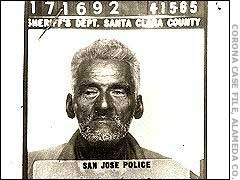
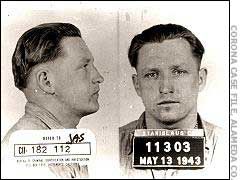
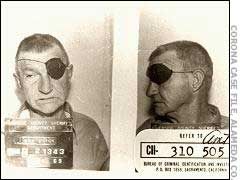
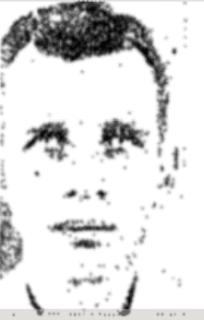
Raymond Reand Muchache, a 47-year-old man, was one of the 25 farm laborers whose killings in Sutter County, California, were attributed to labor contractor Juan Vallejo Corona in 1971. The available online court record does not support an August 22, 1971 death date for Muchache. In the criminal case against Corona, Muchache's murder was charged as Count XX and was alleged to have occurred on or about May 12, 1971.
Some later secondary accounts place his death around May 18, but the contemporaneous court record places the offense on or about May 12, months before the August date.
Muchache's death was part of a series of killings that came to light in the orchards along the Feather River near Yuba City. The investigation began after peach grower Goro Kagehiro noticed a freshly dug, man-sized hole in his orchard on May 19, 1971. When he returned later that day, the hole had been filled. Authorities excavated it the next morning and discovered the body of Kenneth Whitacre. That discovery triggered an intensive search of surrounding orchards and river property. Over the following days, investigators uncovered grave after grave until 25 victims had been recovered. Muchache was identified as one of those victims, although readily available online accounts do not clearly establish the precise date on which his individual grave was opened.
The killings followed a remarkably similar pattern. Muchache is described in accounts of the Corona case as having been stabbed or slashed with a knife or machete. Investigators found that the victims generally suffered deep stab or puncture wounds to the chest together with devastating blows or slashes to the head from a machete or similar heavy cutting weapon. The bodies were concealed in shallow graves in or near orchards where Corona worked as a labor contractor. Many were positioned on their backs with their arms extended over their heads and their shirts pulled upward over their faces. The repeated injuries, burial method and locations convinced investigators that the deaths were connected rather than unrelated attacks on transient agricultural workers.
Corona quickly emerged as the principal suspect. His occupation gave him regular contact with men seeking temporary farm work, many of whom lived transient lives and could disappear without immediately prompting missing-person investigations. Witnesses in the wider investigation testified that Corona approached laborers, offered them work and drove some away in his truck. Several victims were last seen leaving with him. Prosecutors argued that this provided Corona with both access to vulnerable victims and an explanation for being seen with them shortly before they disappeared.
Physical evidence discovered as the graves were opened strengthened the case. In one grave, investigators recovered meat-market receipts bearing Corona's name and signature. In another burial area they found Bank of America deposit slips printed with his name and home address. Investigators also connected Corona to the orchards and grave areas through eyewitness testimony and vehicle evidence. The presence of documents associated directly with him inside graves became particularly damaging because they were difficult to explain as ordinary evidence of his labor-contracting business.
Corona was arrested on May 26, 1971, while investigators were still uncovering victims. Searches of his home, vehicles and work facilities produced an extensive collection of evidence. Officers found knives, including a blade with human blood on it, a bolo knife, a handgun, rubber boots, a shovel and bloodstains in vehicles and on other property associated with him. Testing identified human blood of several blood groups on items recovered during the searches. Investigators also found a green ledger containing names and dates. Several names corresponded with identified murder victims, and prosecutors argued that the entries were far more significant than a routine employment record because they lacked the payroll information, Social Security numbers and payment details that would normally be expected in a labor contractor's business records.
Muchache was ultimately included among the 25 murder charges filed against Corona. The prosecution's case did not depend upon a confession or a known eyewitness to Muchache's actual killing. Instead, prosecutors presented a large circumstantial case linking Corona to the victims, the burial sites, the weapons, blood evidence, vehicles and incriminating documents. Muchache's killing was treated as part of the same continuing series of murders rather than as an isolated homicide with a separate identified suspect.
Corona's first trial resulted in a sweeping conviction. On January 18, 1973, after a lengthy proceeding and approximately 45 hours of jury deliberations, he was found guilty of first-degree murder on all 25 counts, including the murder of Raymond Muchache. He received multiple life sentences. The case, however, did not end there. In 1978, the California Court of Appeal overturned the convictions after finding that Corona had received inadequate legal representation and that his original attorney had operated under a serious conflict of interest. The appellate ruling required a new trial; it did not declare Corona innocent or find that the evidence connecting him to the murders was insufficient.
Corona was tried again in 1982. His new defense attempted to place responsibility for the killings on his brother, Natividad Corona, while Juan Corona himself testified and denied committing the murders. After another lengthy proceeding, the second jury rejected that defense and again convicted Corona of all 25 murders. He was sentenced to 25 life terms and remained incarcerated for the remainder of his life. He was repeatedly denied parole, including at hearings in 2011 and 2016. Authorities reported that during the 2011 parole proceedings Corona acknowledged responsibility for the killings, although at his later hearing he said he could not remember committing them.
Juan Corona died of natural causes on March 4, 2019, while serving his sentences in California. No other person was convicted of Raymond Muchache's murder. The final legal outcome therefore left Muchache as one of the 25 identified and unidentified victims for whose deaths Corona was twice convicted, first in 1973 and again after retrial in 1982.