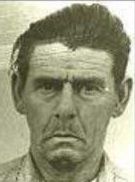
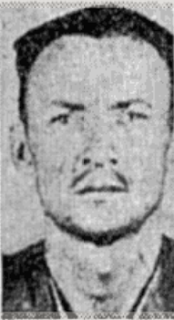
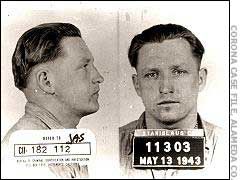
Sam Bonafiede, a 55-year-old man also known as Joe Carriveau, was one of the 25 itinerant or migratory farmworkers murdered in Sutter County, California, during the series of killings attributed to farm-labor contractor Juan Vallejo Corona in the spring of 1971. Although August 22, 1971, has been associated with Bonafiede in the information provided, court records do not support that date as the date of his death. The formal murder count against Corona placed Bonafiede's killing sometime between April 21 and May 20, 1971, while a ledger seized from Corona's home contained the entry "Sam Bonafiede May 6 1971." Later victim compilations consequently identify May 6, 1971, as the most likely date of Bonafiede's death.
Bonafiede's killing occurred during a frightening sequence of murders centered on orchards near Yuba City and Marysville along the Feather River. The victims were largely men who moved from place to place seeking seasonal agricultural work. Corona was himself a labor contractor who recruited and supervised farmworkers, giving him regular contact with men looking for jobs and access to the Kagehiro and Sullivan ranch properties where the graves were ultimately discovered. Investigators concluded that the victims had been killed in a remarkably similar manner. Nearly all suffered chopping or hacking injuries to the head, often from a heavy cutting weapon such as a machete, and many also suffered deep stab wounds to the upper left chest. Bonafiede has been described in accounts of the case as having been stabbed and slashed with a knife or machete.
The murders began to unravel in May 1971 after ranch owner Goro Kagehiro noticed a freshly dug hole in a peach orchard on May 19. When he returned later that day, the hole had mysteriously been filled. Authorities excavated the location the following morning and discovered the body of Kenneth Whitacre. As deputies searched the surrounding orchards, additional shallow graves appeared. Between May 20 and June 4, authorities recovered 25 bodies from the Kagehiro and Sullivan ranches. Bonafiede was eventually identified as one of the dead. The bodies had generally been concealed in isolated orchard areas, and similarities in their wounds, positioning and burial convinced investigators that the killings were connected.
Evidence increasingly pointed toward Juan Corona. Items directly associated with him were found in some of the graves, including signed meat-market receipts and bank deposit slips bearing his name and address. Witnesses also placed Corona and his vehicles around the ranches and near areas where bodies were subsequently discovered. Investigators learned that some victims had last been seen accepting work from Corona and leaving with him. Of particular significance to Bonafiede's case was the green ledger recovered from Corona's bedroom. Among the names and dates written in Corona's handwriting was "Sam Bonafiede May 6 1971." Other names in the book corresponded with men whose bodies had been found in the orchards, strengthening prosecutors' argument that the ledger was more than an ordinary employment record.
Juan Corona was arrested on May 26, 1971, as the search for bodies was continuing. Searches of property and vehicles under his control produced an extensive collection of evidence, including knives, a machete or bolo-type knife, a pistol, a shovel, a post-hole digger and numerous bloodstained items. Human blood of several different blood groups was detected on weapons, clothing and inside vehicles associated with Corona. Investigators also found human hair embedded in dried soil on the post-hole digger. Prosecutors built their case largely from this web of physical and circumstantial evidence rather than from an eyewitness who had actually seen the murders committed.
Bonafiede's death became Count XXIV of the 25-count murder prosecution against Corona. The charge formally accused Corona of murdering "Sam Bonafiede, also known as Joe Carriveau," sometime between April 21 and May 20, 1971. Prosecutors argued that the similarities among the killings, Corona's access to the burial locations, his contacts with the victims, the evidence discovered in the graves, the blood evidence and the names recorded in his ledger all pointed to the same perpetrator.
Corona's first trial was moved away from Sutter County because of the enormous publicity surrounding the discovery of the bodies. After a lengthy proceeding, the jury found him guilty of first-degree murder on all 25 counts in January 1973, including the murder of Bonafiede. He received life sentences for the killings. The case did not end there. In 1978, a California appellate court overturned the convictions after concluding that Corona had been denied effective legal representation. His attorney had conducted little meaningful defense investigation, called no defense witnesses and had entered into an arrangement involving literary and dramatic rights to Corona's story that the appellate court found created a serious conflict of interest.
Corona therefore faced a second trial in 1982. This time his defense presented dozens of witnesses and attempted to shift responsibility for the murders to Corona's half-brother, Natividad Corona. Defense attorneys argued that Natividad, who had previously been accused of a violent machete attack and had since died in Mexico, could have been responsible for the orchard killings. Juan Corona himself took the witness stand and denied having anything to do with the deaths. Prosecutors countered with the extensive physical and circumstantial evidence tying Juan Corona to the victims and burial sites, including the incriminating ledger in which Bonafiede's name appeared.
The second jury rejected the defense theory. On September 23, 1982, Juan Corona was again convicted of all 25 murders, permanently establishing his criminal responsibility for Bonafiede's killing as well as the other orchard murders. He was returned to prison to serve 25 life sentences. Corona repeatedly sought parole over the following decades but was never released. He remained incarcerated until his death from natural causes in 2019.
Bonafiede's murder was therefore not an unsolved Sutter County homicide. Juan Vallejo Corona was arrested within days of the discovery of the orchard graves, formally prosecuted for Bonafiede's murder, convicted once in 1973 and, after that conviction was overturned for deficiencies in his legal representation, tried and convicted again in 1982. The surviving court record is especially significant in Bonafiede's case because Corona's own ledger contained both his name and the date May 6, providing one of the clearest surviving clues to when Bonafiede likely disappeared into the series of killings that shocked the Yuba City area in 1971.