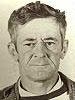
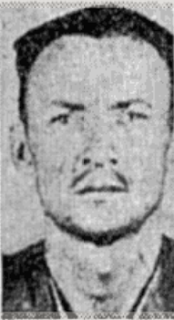
Charles Fleming was a 67-year-old male drifter who became one of the victims in the series of killings committed in the orchards outside Yuba City in Sutter County, California, in 1971. Although May 1, 1971 has sometimes been associated with his death, the surviving court record does not support that exact date. Prosecutors charged Juan Vallejo Corona with murdering Fleming sometime between May 8 and May 11, 1971.
Particularly significant was an entry in a ledger later seized from Corona's home that read, with apparent misspellings, “May 11 Charles Linil Flemig,” strongly suggesting that May 11 was the date connected by Corona's own records to Fleming.
Fleming's remains were discovered on May 24, 1971, when workers operating a tractor on the nearby Sullivan ranch noticed an area where the ground appeared to have collapsed. The discovery came only four days after authorities had unearthed Kenneth Whitacre from a shallow grave in a neighboring orchard. Ranch foreman Ray Duron examined the suspicious depression and summoned authorities. When investigators excavated it, they uncovered another buried victim. It took several days before the remains were identified as Fleming, who was described in accounts of the investigation as a drifter living on the margins of the agricultural communities around Marysville and Yuba City.
The condition of Fleming's remains fit the extraordinary pattern that investigators were beginning to recognize. Corona's victims suffered severe stabbing and chopping or slashing injuries, generally involving penetrating wounds to the chest and violent blows to the head from knives or machete-like weapons. The bodies were concealed in shallow graves in essentially the same farming area, generally placed on their backs with clothing pulled upward toward or over the head. Fleming was subsequently included among the victims described as having been stabbed and slashed with a knife or machete. His discovery transformed what initially could have been viewed as an isolated homicide into the beginning of a much larger excavation of the surrounding orchards.
As deputies continued searching near the graves, the evidence began pointing toward Juan Corona, a local farm-labor contractor who supplied workers to ranches in the area and therefore had regular access to both transient laborers and the property where the bodies were buried. Investigators found meat-market sales slips associated with Corona in one of the graves and Bank of America deposit slips bearing his name and Yuba City address in another. By May 26, only two days after Fleming's body had been unearthed, authorities believed they had accumulated enough evidence to arrest Corona. Search warrants were then executed at his home and at facilities he used on the Sullivan ranch.
Those searches produced a substantial collection of circumstantial and physical evidence. Investigators recovered knives bearing human blood, a bolo knife from beneath the driver's seat of Corona's van, a shovel and bloodstained rubber boots from the vehicle, and bloodstains in and around the van itself. A post-hole digger containing embedded human hairs was found in his garage. Most important to Fleming's individual case was the green ledger discovered in a filing cabinet in Corona's bedroom. Seven identified victims appeared by name in the ledger alongside dates, and handwriting experts testified that the entries were written by Corona. Fleming's name was among them beside the May 11 entry. The prosecution argued that the book helped establish Corona's contacts with his victims and tied particular dates to their disappearances and deaths.
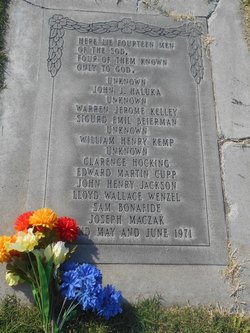
By the time authorities stopped excavating on June 4, they had recovered 25 bodies from orchards along the Feather River. Twenty-one victims were eventually identified, including Fleming, while four remained unidentified. The similarities between the injuries, burial positions, locations and other evidence convinced investigators and prosecutors that the killings were the work of the same perpetrator or perpetrators. Corona's position as a labor contractor was particularly important because witnesses described him approaching transient workers with offers of employment and, in several documented instances, driving away with men who were never seen alive again.
Corona was prosecuted for all 25 killings, with Fleming's murder charged as Count II. In 1973 a jury found Corona guilty of 25 counts of first-degree murder. His convictions appeared to bring the enormous Sutter County investigation to a conclusion, but the legal proceedings were far from finished. In 1978, the California Court of Appeal reversed the convictions and ordered a new trial after concluding that Corona had been deprived of effective legal representation and that his original attorney's arrangement involving literary and dramatic rights to Corona's story created a serious conflict of interest. The reversal was not a finding that Corona was innocent; it required the state to try the case again.
During the second trial, Corona's defense offered another possible suspect: his brother, Natividad Corona. Defense attorney Terence Hallinan argued that Natividad, rather than Juan, might have been responsible for the orchard killings and attempted to place him in the Yuba City area near the relevant period. Natividad had previously been associated with a savage attack on another man, and the defense used that history to support its alternative theory. Natividad, however, was never arrested, charged or convicted in connection with Fleming's murder or the other 24 orchard killings, and he had died before the retrial. The theory therefore remained a defense argument rather than a separate prosecution of another suspect.
The second jury again rejected Corona's claim of innocence. In 1982 he was convicted for a second time of all 25 murders, including the killing of Charles Fleming, and received 25 concurrent life sentences. He remained imprisoned for the rest of his life and was repeatedly denied parole. Corona died in a California hospital in March 2019 while still serving the sentences. Fleming's murder therefore ultimately resulted in an arrest, prosecution and two separate jury convictions of Juan Vallejo Corona, despite the reversal of the original judgment and the defense's later attempt to identify Corona's brother as the actual killer.